


2026 Best Wooden Door Hinge Types for Global Buyers?

Choosing the best Wooden Door Hinge in 2026 requires more than comparing finish, price, or online ratings. Global buyers must examine door weight, opening frequency, climate, installation accuracy, and replacement access. A hinge that performs well in a dry showroom may develop corrosion beside a coastal entrance. Small details matter.

The UNEP and Global Alliance for Buildings and Construction 2024 Global Status Report states that buildings consumed about 32% of global energy and produced approximately 34% of global carbon emissions in 2022. This wider pressure is influencing material selection, product life, and maintenance decisions. Door hardware is a small component, yet durable hinges can reduce repair frequency and material waste. The World Green Building Trends research also shows continued international interest in efficient, durable, and environmentally responsible building products.

This guide compares butt hinges, ball-bearing hinges, concealed hinges, spring hinges, and specialty wooden-door options. It considers load capacity, cycle testing, corrosion resistance, screw geometry, adjustment range, and compatibility with timber movement. Relevant references include ANSI/BHMA A156.1 for architectural hinges, EN 1935 for single-axis hinges, and ISO 9227 for salt-spray corrosion testing. These standards support better procurement decisions, but they do not remove every uncertainty.

There is no universal winner.

A heavy oak door may need ball-bearing support, while a light interior door may perform adequately with a simpler butt hinge. Budget, finish, and local service also influence the final choice. Some supplier claims remain difficult to verify. Buyers should request test evidence, installation guidance, and sample approval before placing large international orders.
2026 Best Wooden Door Hinge Types for Global Buyers?

Wooden Door Hinge Basics: Structure, Materials, and Core Functions

2026 Best Wooden Door Hinge Types for Global Buyers?

Wooden door hinges are compact load-bearing systems, not merely decorative fittings. A typical hinge includes leaves, a knuckle, a pin, and fixing holes. The leaves transfer door weight into the frame. The knuckle controls rotation. The pin keeps both leaves aligned during repeated movement. Small parts matter.

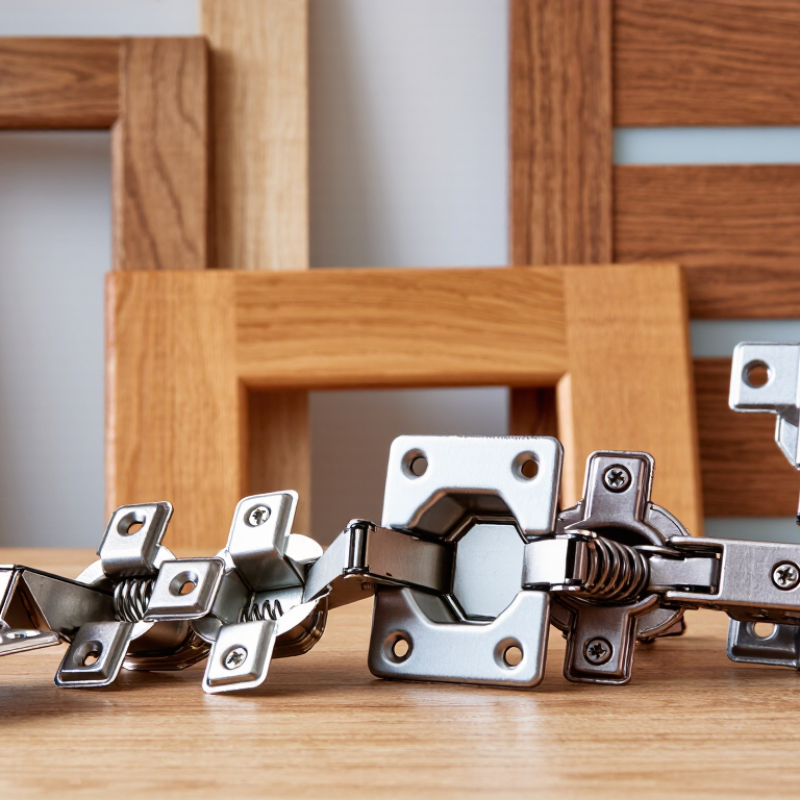
Common types include butt hinges, ball-bearing hinges, concealed hinges, and pivot hinges. Butt hinges suit many interior timber doors because their structure is simple and serviceable. Ball-bearing models reduce friction on heavier doors. Concealed hinges protect the visual line, but installation demands accurate routing. Pivot hinges support wider movement and unusual door layouts. In practice, the best choice depends on door mass, opening frequency, frame strength, and desired appearance.

Material selection affects durability. Stainless steel resists moisture and staining, while brass offers a warmer appearance and workable corrosion resistance. Zinc alloys may lower cost, but their strength can vary significantly. The 2024 Mordor Intelligence Door Hardware Market report estimates continued market growth through 2029, driven partly by renovation and higher-performance hardware demand. That trend does not make every hinge suitable. A 2023 ASTM-related testing review found that cyclic testing, load capacity, and corrosion exposure remain important performance checks for architectural hardware. Buyers should compare test evidence, not only surface finish. I still see projects choosing attractive hinges with undersized screws. That is a preventable mistake.

Main Wooden Door Hinge Types and Their Suitable Applications

2026 Best Wooden Door Hinge Types for Global Buyers?

Wooden doors need hinges matched to weight, movement, and installation conditions. Butt hinges suit most interior and residential doors because their leaves sit neatly inside the jamb and door edge. Ball-bearing butt hinges are better for heavy solid-wood doors or frequent traffic. They reduce friction at the knuckle, although poor alignment can still cause squeaking.

Pivot hinges work well for tall, wide, or unusually heavy doors. They transfer part of the load toward the floor, creating smoother movement when the frame is strong enough. Concealed hinges support clean, modern interiors, but installers need accurate routing and sufficient door thickness. Spring hinges can help a door return to its closed position, yet their closing force may damage light timber or create unwanted noise.

Barn-style strap hinges fit rustic doors, gates, and oversized timber panels. Their long leaves spread the load across a larger wood area. For humid coastal projects, corrosion-resistant finishes matter more than decorative appearance. The 2024 Grand View Research door market report estimated the global door market at about USD 140.7 billion in 2023, showing the scale of international door demand, though it does not measure hinge sales directly. The 2023 ANSI/BHMA A156.1 standard remains a useful reference for butt-hinge performance and testing.

One detail is often missed. Hinge quantity should follow door weight, height, and usage, not appearance alone. Local testing is still necessary. Reports guide selection, but real timber movement can defeat a perfect specification.

How to Choose Hinge Size, Load Capacity, and Door Compatibility

Choosing a wooden door hinge begins with the door, not the hinge finish. Measure the door height, width, thickness, and actual weight, including glass or metal fittings. A 100 mm hinge may suit a light interior door, while a taller, heavier door may need 125 mm hinges. The hinge leaf must fit the mortise cleanly, with no raised edges or loose corners.

Check load capacity carefully. Manufacturers may list capacity per hinge or for a complete hinge set, which can cause costly mistakes. For a 45 kg solid-wood door using three hinges, choose a tested system with a comfortable safety margin. More hinges do not automatically solve poor alignment. Use strong, correctly sized screws that reach the frame structure, not only the thin casing. Test the door after installation for sagging, rubbing, and uneven gaps.

Compatibility also depends on swing direction, hinge thickness, knuckle clearance, and frame construction. Exterior doors need corrosion-resistant materials and drainage-friendly detailing, especially in humid coastal areas. I have seen attractive hinges fail because the door edge was too narrow for the selected leaf. That mistake is easy to miss. For international purchasing, request dimensional drawings, load-test evidence, installation instructions, and material details. Local carpentry practice may differ, so confirm the mortise depth and screw pattern before ordering. A small sample installation is often wiser than trusting a catalogue chart alone.

Installation Methods, Alignment Standards, and Adjustment Options

2026 Best Wooden Door Hinge Types for Global Buyers?

Wooden doors perform better when hinge selection matches their weight, thickness, and opening frequency. Butt hinges remain practical for many interior doors. Concealed hinges offer a cleaner appearance but demand precise routing. Pivot hinges suit larger doors, although their floor and head frames need strong support. During installation, fit each hinge leaf flush with the wood surface. Even a small raised edge can twist the door.

Use a straightedge to check hinge alignment before tightening screws. The hinge barrels should form one vertical axis. A consistent reveal, often around 3 millimeters, helps prevent rubbing, but local construction practice may differ.

Pre-drilling reduces split wood, especially near door edges. Adjustment options vary by hinge design. Some hinges allow lateral movement, while others provide height or depth correction. Set the door after the frame settles. This step is often skipped, and that causes avoidable callbacks.

Tips: Mark hinge positions with a sharp pencil and verify measurements twice. Support the door with wedges during fitting. Tighten screws gradually, not in one sudden pass. Test the latch after every adjustment. If the door still drops, the problem may be frame movement rather than hinge quality. I have found that “perfect” alignment during installation can change after seasonal humidity shifts. Leave room for that reality. A final clearance check in both dry and humid conditions is wiser than trusting one inspection.

Global Buying Factors: Finishes, Standards, Packaging, and Supplier Checks

For 2026 wooden-door projects, buyers usually compare butt hinges, ball-bearing hinges, and concealed hinges. Butt hinges suit standard interior doors. Ball-bearing models reduce friction on heavier timber leaves. Concealed hinges create cleaner lines, but installation tolerances must be precise. Standards should guide selection. ANSI/BHMA A156.1 covers commercial hinges in North America, while EN 1935 uses a 14-grade classification and durability testing up to 200,000 cycles. Do not accept a certificate without checking its scope, test date, and product reference.

Finish quality deserves equal attention. Request coating specifications, surface-preparation details, and corrosion-test results. ASTM B117 can compare salt-spray resistance, but it does not predict every real installation condition. Coastal air, cleaning chemicals, and trapped moisture may expose weak finishes quickly. Stainless steel, plated steel, and powder-coated surfaces behave differently. Test the actual hinge batch, not only a showroom sample. Small mismatch.

Packaging also affects hinge performance. The U.S. EPA reported that containers and packaging represented 28.1% of municipal solid waste generation in its 2018 Facts and Figures report. Buyers can reduce waste with recyclable cartons, molded protection, and accurate carton counts. More importantly, each hinge should be separated from loose screws and wrapped against abrasion. Use ISTA test procedures for export shipments when damage risk is high. Supplier checks should include factory audit records, batch traceability, dimensional reports, and corrective-action history. Ask twice. A low price can hide inconsistent pin diameter, missing fasteners, or unstable color matching. I still prefer a small pilot order before approving a full container.

Go to Top