



7 Best Glue Laminated Beam Suppliers for Global Buyers
Choosing a dependable glue laminated beam supplier requires more than comparing catalog prices. Global buyers must examine structural grades, adhesive systems, manufacturing controls, documentation, and delivery experience. A beam may look flawless in a warehouse, yet its moisture content, finger joints, or certification records can create serious project risks.
This guide reviews seven suppliers serving international markets. It considers product consistency, custom sizing, engineering support, export packaging, lead times, and after-sales communication. Practical details matter. For example, a supplier should explain how beams are protected during ocean transport and how replacement claims are handled. Small answers often reveal large differences.
Erol Karacabeyli, a respected timber engineering researcher and author, has said, “Good design, good detailing, and good construction are essential to timber performance.” That principle also applies to supplier selection. A technically strong glue laminated beam still needs accurate drawings, suitable connections, and disciplined site storage. Do not overlook these points.
The ranking is useful, but it is not absolute. Regional availability, currency changes, certification requirements, and project scale can alter the best choice. Some suppliers communicate impressively but provide limited technical evidence. Others offer excellent engineering yet lack flexible export support. That is where buyers should remain skeptical.
The following comparison aims to provide a clear, experience-based starting point. It highlights strengths, limitations, and questions worth asking before signing a purchase agreement. Reliable sourcing takes patience. Sometimes, the cheapest quote is simply incomplete.
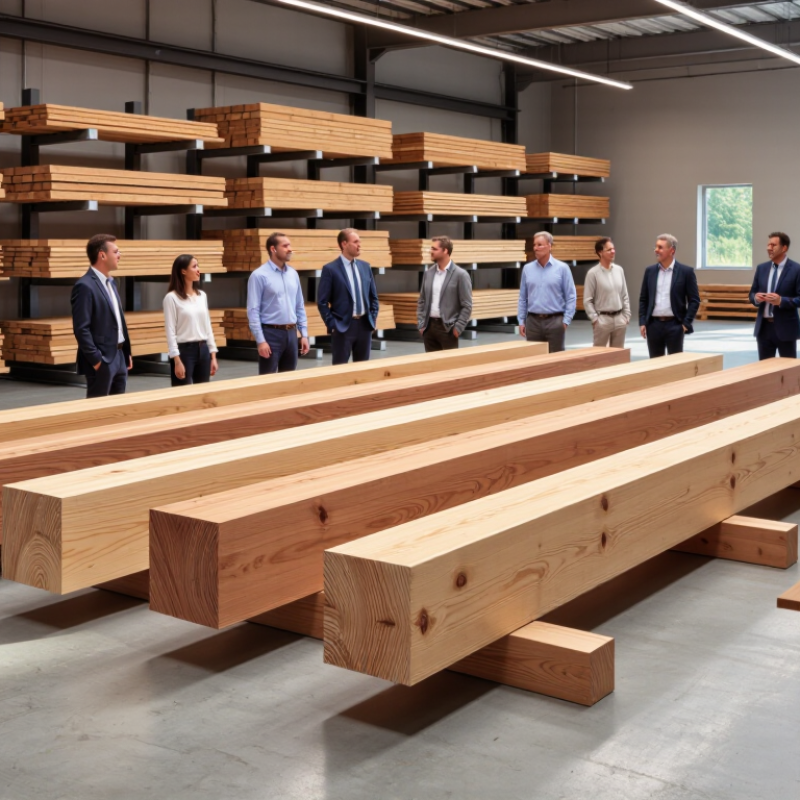
What Glued Laminated Beams Are and Why They Suit Global Construction
Glued laminated timber, or glulam, consists of kiln-dried wood laminations bonded under controlled pressure. The grain runs mainly in the same direction. This engineered structure creates predictable strength, curved forms, and longer spans than many solid-sawn members. Factory production also reduces cutting waste on site. However, adhesive quality and moisture control remain critical.
Global construction benefits from glulam’s relatively low weight. A lighter beam can reduce foundation loads, transport effort, and installation time. It suits sports halls, warehouses, schools, bridges, and residential frames. The UNEP 2023 Global Status Report states that buildings and construction accounted for 37% of global energy-related and process carbon dioxide emissions. Renewable structural materials can support lower-impact designs, when sourcing and durability are properly managed. The FAO Global Forest Resources Assessment 2020 reports that forests cover about 31% of global land area. Responsible procurement still matters.
Not automatically green.
For international buyers comparing seven potential suppliers, request structural test data, product certificates, adhesive specifications, moisture limits, and fire-design documentation. Confirm compliance with the project’s local codes before placing an order. Check timber traceability and packaging details, especially for long-distance shipping. A supplier may quote an attractive beam price, yet omit connection engineering or protective treatment. That weakens the comparison. Glulam also needs careful detailing around exposed end grain, roof leaks, and changing humidity. In practice, the best specification is rarely the shortest one.
7 Best Glue Laminated Beam Suppliers for Global Buyers - What Glued Laminated Beams Are and Why They Suit Global Construction
| Supplier Category | Typical Supply Region | Common Timber Species | Relevant Product Standard | Typical Product Range | Main Strength | Key Buyer Check |
|---|---|---|---|---|---|---|
| 1. North American Structural Glulam Supplier | United States and Canada | Douglas fir, southern pine, spruce-pine-fir, larch | ANSI/AWC A190.1; APA-related qualification may apply | Straight beams, curved members, arches and custom profiles; project lengths commonly exceed 10 m when engineered and transported appropriately | Strong structural engineering support and established building-code documentation | Confirm design values, preservative treatment, fire design data and export packaging |
| 2. European Certified Glulam Supplier | Central and Western Europe | Norway spruce, silver fir, larch and Douglas fir | EN 14080; strength classes such as GL24h, GL28c and GL30c are commonly specified | Standard rectangular beams, columns, panels and curved components; cross-sections are made to engineering drawings | Well-defined European strength classification and CE-related technical documentation | Check whether the declared performance is accepted by the destination-country building authority |
| 3. Nordic Timber Glulam Supplier | Sweden, Finland and Norway | Nordic spruce and Scots pine | EN 14080 and applicable national execution requirements | High-appearance beams, columns, roof structures and prefabricated timber components | Consistent machining quality, moisture control and suitability for low-carbon timber construction | Request moisture content, surface-quality grade, finger-joint details and chain-of-custody certificates |
| 4. Central European Custom Fabricator | Germany, Austria and surrounding markets | Spruce, fir, larch and Douglas fir | EN 14080; production may also follow EN 1090 requirements for related structural fabrication | CNC-cut beams, curved structures, hybrid timber assemblies and prefabricated roof or frame systems | High-precision fabrication and strong integration with architect and engineer drawings | Verify shop-drawing approval procedures, tolerances, connection hardware and site-assembly support |
| 5. East Asian Engineered-Wood Supplier | China, Japan and South Korea | Douglas fir, Japanese cedar, larch, spruce and imported softwoods | GB/T 26899, JAS 1152 or destination-market standards, depending on the product and country | Commodity beams, large-section members, custom laminated components and prefabricated timber parts | Flexible production capacity and competitive pricing for containerized international orders | Require independent test reports, adhesive classification, fumigation documents and a pre-shipment inspection |
| 6. Australian and New Zealand Glulam Supplier | Australia and New Zealand | Radiata pine, Douglas fir, plantation pine and selected hardwoods | AS/NZS 1328.1 and AS/NZS 1328.2 | Beams, columns, portal frames, bridges and architectural timber structures | Experience with high-UV, coastal and cyclone-prone construction environments | Confirm durability class, exterior coating, termite requirements, moisture limits and local engineering approval |
| 7. South American Plantation-Timber Supplier | Brazil, Chile and neighboring export markets | Radiata pine, southern yellow pine, eucalyptus and other plantation-grown species | Local standards plus EN, ANSI or project-specific requirements for export orders | Structural beams, columns, trusses and laminated components for residential, commercial and industrial projects | Access to plantation-grown timber and potential advantages in regional shipping lanes | Check species-specific design values, adhesive durability, legal-harvest evidence, export treatment and container loading plans |
Related Posts
-
What Are the Top Glulam Beam Types?
-
Why Choose Laminated Wood Beams for Your Construction Needs?
-
China Top Laminated Wood Beams Advantages and Applications Explained?
-

2026 Top Innovations in Glue Laminated Beam Design and Applications?
-

China Top 10 Prefabricated Wall System Suppliers for Global Buyers?
-

Why Choose Raised Panel Wainscoting for Your Home Décor?