


How to Choose the Right Steel Square Pipe?

Choosing the right Steel Square Pipe begins with its intended job, not its appearance. A pipe supporting a mezzanine needs different properties from one framing a garden gate. World Steel Association data shows that global crude steel production reached about 1.89 billion metric tonnes in 2023. This scale reflects steel’s importance, but it does not make every product interchangeable.

The correct selection depends on load, wall thickness, outside dimensions, steel grade, welding method, corrosion exposure, and required tolerances. ASTM A500/A500M covers cold-formed welded and seamless carbon structural tubing, including square sections. EN 10219 addresses cold-formed welded structural hollow sections. These standards help buyers compare mechanical properties and manufacturing requirements with greater confidence. Small details matter. A 2 mm difference in wall thickness can affect weight, stiffness, welding heat, and project cost.

A reliable buyer should request mill certificates, dimensional inspection records, and coating information before ordering. Galvanized Steel Square Pipe may suit humid or outdoor environments, while painted carbon steel can work indoors with suitable maintenance. A neat finish can mislead. Surface quality alone cannot prove structural performance. In fabrication practice, incorrect corner radii and unverified grades often create avoidable problems during cutting and welding. The uncomfortable truth is that no selection guide fits every project. Engineers should verify local design loads, applicable standards, and supplier documentation. Do not guess. A thoughtful comparison usually saves more than the cheapest quotation.
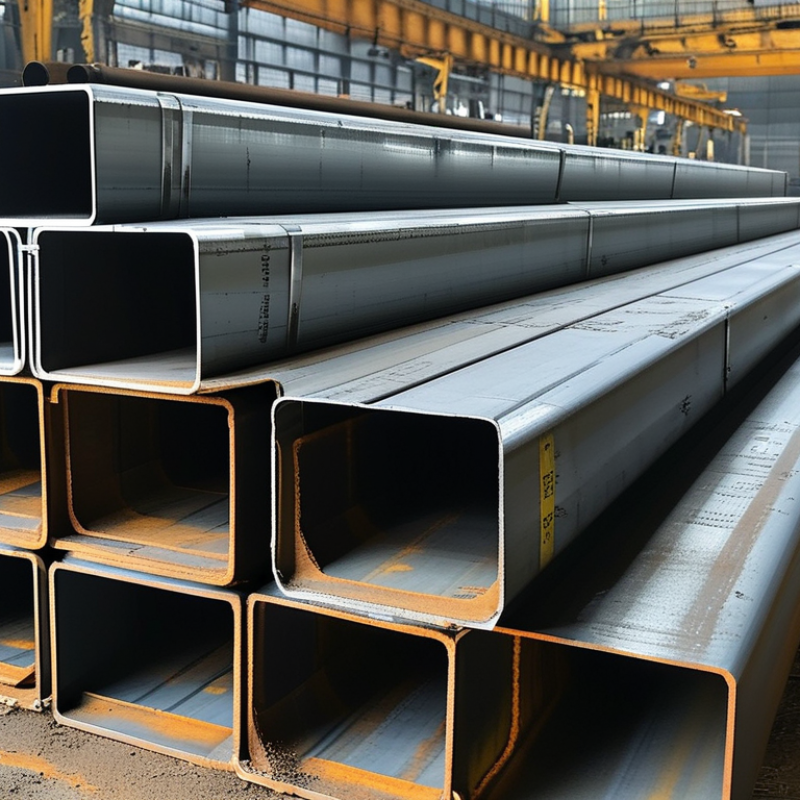
How to Choose the Right Steel Square Pipe?

Define the Purpose and Performance Requirements of the Steel Square Pipe

Choosing the right steel square pipe starts with its purpose, not its appearance. Will it carry a roof frame, protect equipment, form a gate, or support a light partition? Each use creates different demands. A pipe for a warehouse column may face compression and buckling. A garden frame may need weather resistance more than high strength. Record the load, span, connection method, and expected service life before requesting quotations. A quick sketch helps.

Define performance requirements in measurable terms. Specify outside dimensions, wall thickness, steel grade, straightness, and dimensional tolerances. Consider static loads, impact, vibration, and temperature changes. For outdoor service, ask about coating, drainage, and corrosion allowance. Hollow sections can trap water at unsealed ends. This detail is easy to miss. Check welding requirements as well. Some higher-strength grades require controlled procedures and qualified welders. Confirm applicable standards, material test certificates, and independent inspection options. Avoid vague terms such as “heavy duty.”

A reliable choice also considers handling and installation. A thick-wall section may resist loads well but increase weight, cutting time, and connection costs. Compare calculated capacity with actual support conditions, rather than relying only on catalog tables. If galvanizing is required, verify whether fabrication occurs before or after treatment. I have seen drawings revised because the corner radius was overlooked. That small mistake changed the fit. Recheck critical assumptions with a structural engineer. Requirements should be clear enough for another professional to audit.

Choose the Right Steel Grade, Size, Wall Thickness, and Shape

How to Choose the Right Steel Square Pipe?

Choosing steel square pipe starts with the job, not the catalogue. Identify the load, span, connection method, and exposure conditions. A pipe supporting a roof frame needs different properties from one used for a light interior partition. Check the required steel grade for strength, weldability, and corrosion resistance. Higher strength is not always better. It may complicate cutting, forming, or welding.

Size affects stiffness and available installation space. A larger outside dimension can reduce bending, but it may create clearance problems around bolts or brackets. Measure the actual space before ordering. Wall thickness also matters. Thin walls reduce weight and cost, yet they can dent during handling or weaken around drilled holes. Thick walls add durability, though they increase weight and fabrication time. Small details matter.

The cross-sectional shape should match the connection and load direction. Square sections offer balanced resistance and flat faces for simple mounting. Confirm outside dimensions, wall thickness tolerance, length, and corner radius with the supplier’s technical documents. These details can affect fit, especially when pipes slide into sleeves or align with plates. In practical inspections, rust, crushed corners, and inconsistent walls are warning signs. I would not choose by price alone. That shortcut often becomes expensive during installation. Check the grade certificate and inspection requirements before cutting the first piece. Even experienced buyers can overlook tolerances.

Compare Manufacturing Methods, Standards, and Quality Certifications

Choosing a steel square pipe starts with its manufacturing route, not its appearance. Electric-resistance-welded pipe usually offers consistent dimensions and efficient production. Seamless pipe can provide greater pressure resistance, but it often costs more. Cold-formed sections may show sharper corners, while hot-finished sections can reduce residual stress. Plant inspections often reveal a practical weakness: clean welds do not guarantee accurate wall thickness.

Standards define what suppliers must prove. ASTM A500 covers structural carbon-steel tubing, including mechanical properties and dimensional tolerances. EN 10219 applies to cold-formed welded structural hollow sections, while EN 10210 addresses hot-finished sections. Compare yield strength, tensile strength, corner radius, straightness, and wall-thickness tolerance. Do not accept “meeting international standards” without a test report. It is too vague.

Certification adds credibility, but it is not absolute proof. ISO 9001 certification supports documented quality-control systems, while heat numbers, mill certificates, weld inspections, and independent sampling verify the actual batch. The World Steel Association reported about 1.89 billion tonnes of crude steel production in 2023, showing the scale of global supply. Scale does not equal consistency. A serious buyer should match the pipe grade with load calculations, corrosion exposure, and welding requirements. Review the certificate date, issuing body, and scope. Small details matter. The inconvenient truth is that even certified suppliers can make errors, so periodic inspection remains worthwhile.

Evaluate Corrosion Protection, Surface Finish, and Service Environment

How to Choose the Right Steel Square Pipe?

Corrosion protection should match the service environment, not just the purchase price. The NACE IMPACT study estimated global corrosion costs at about 2.5 trillion US dollars annually, equal to 3.4% of global GDP. That figure makes prevention difficult to ignore. For indoor, dry applications, a standard carbon steel pipe with a prepared surface may be sufficient. Outdoor exposure, coastal air, de-icing salts, or chemical vapors require stronger protection. Consider hot-dip galvanizing, a qualified coating system, or corrosion-resistant steel. ISO 12944 classifies atmospheric corrosivity from low indoor conditions to extreme industrial and marine exposure. Use that framework before choosing a coating.

Surface finish affects both appearance and coating life. Mill scale can hide defects and reduce paint adhesion. Abrasive blasting or suitable chemical preparation creates a cleaner, more consistent surface. Pay attention to welds, cut edges, and internal corners. These areas often fail first. A smooth finish is not automatically a durable finish. That assumption is convenient, but often wrong.

Service temperature, humidity, drainage, and maintenance access also matter. A square pipe exposed to standing water needs drain holes or a design change, not merely thicker paint. In my experience, specification sheets often overlook internal condensation. It deserves attention. Review coating thickness, surface cleanliness, edge treatment, and inspection methods against the selected standard. Small preparation errors can become expensive repairs.

Verify Supplier Reliability, Cost, Availability, and Technical Support

Choosing a steel square pipe supplier requires more than comparing price per tonne. The World Steel Association’s World Steel in Figures 2024 reports global crude steel production of about 1.89 billion tonnes in 2023. That scale can suggest availability, but local stock still depends on grade, wall thickness, and delivery routes.

Ask suppliers for recent mill test certificates, heat numbers, dimensional reports, and traceability records. Confirm compliance with the required specification, such as ASTM A500 or an equivalent standard. A sample inspection can reveal corner radius, wall variation, surface defects, and actual weight. Small details matter.

Cost should include freight, cutting, testing, storage, and possible rejection. A cheaper pipe becomes expensive after one failed fabrication batch. World Steel Association’s October 2024 Short Range Outlook forecast steel demand growth of 1.2% in 2025, showing why prices and lead times may remain sensitive to market changes. Request a written stock position and a realistic replenishment date. “In stock” can mean only partial quantities.

Technical support is equally practical. Can the supplier recommend a suitable grade? Can they explain welding limits, coating options, and tolerance issues? Ask how quickly engineers respond when drawings change. I have seen purchasing decisions focus too heavily on quotations. That is a mistake. Availability promises should be tested against past delivery records, not polite emails. Even reliable suppliers can miss dates, so maintain a backup source for critical sizes.

How to Choose the Right Steel Square Pipe? - Verify Supplier Reliability, Cost, Availability, and Technical Support

Evaluation Dimension What to Verify Recommended Benchmark or Requirement Required Evidence Suggested Weight Decision Guidance
Product Standard Confirm the manufacturing and dimensional standard specified for the project. Use the standard required by the design documents, such as ASTM A500/A500M for structural hollow sections or EN 10219 for cold-formed welded structural sections. Quotation, product datasheet, applicable standard, and certificate of compliance. 15% Reject offers that do not clearly identify the applicable standard and product designation.
Steel Grade and Strength Check yield strength, tensile strength, elongation, and suitability for the structural load. For common structural applications, ASTM A500 Grade B has a minimum yield strength of approximately 46 ksi (315 MPa); higher-strength grades may be required by the engineer. Heat-number-based mill test certificate showing chemical and mechanical properties. 15% Do not substitute a lower grade solely because its price is lower.
Dimensions and Wall Thickness Verify outside dimensions, nominal wall thickness, corner radius, and permissible tolerances. The size and wall thickness must match the approved drawings and the tolerances of the specified product standard. Dimensional inspection report, calibrated measuring records, and sample inspection. 12% Pay attention to actual wall thickness, not only the nominal thickness shown on the quotation.
Surface Condition and Weld Quality Inspect the surface for cracks, laminations, deep corrosion, excessive dents, and visible weld defects. The pipe should be free from defects that impair structural performance, fabrication, coating, or service life. Visual inspection procedure, weld inspection records, and photographs or samples when required. 8% Request corrective-action records if recurring weld or surface problems have been reported.
Supplier Reliability Assess production capability, quality-system control, traceability, and delivery performance. Prefer suppliers able to provide consistent batch traceability, documented inspection procedures, and measurable on-time delivery records. Quality certificates, audit results, sample inspection reports, references, and recent delivery-performance data. 18% A low price should not compensate for weak traceability or repeated delivery failures.
Total Cost Compare material price together with cutting, packaging, freight, testing, taxes, and possible rework. Compare offers on the same basis, such as price per metric ton or price per meter, with identical grade, size, quantity, and delivery terms. Itemized quotation, Incoterms, freight estimate, payment terms, packaging charges, and validity period. 15% Use landed cost rather than the basic steel price when comparing suppliers.
Availability and Lead Time Confirm stock status, production capacity, minimum order quantity, and dispatch schedule. Require a written lead time for the exact size, grade, finish, quantity, and delivery location; separate stocked material from made-to-order material. Inventory confirmation, production schedule, shipping plan, and clearly stated delivery commitment. 10% Include buffer time for inspection, customs clearance, inland transport, and unloading.
Technical Support Evaluate support for grade selection, weight calculations, fabrication, welding, coating, and documentation. The supplier should respond in writing to technical questions and provide drawings, tolerances, certificates, and handling guidance when applicable. Technical contact details, response-time commitment, product drawings, welding information, and documentation samples. 5% Give preference to clear, technically accurate answers rather than unsupported assurances.
Testing and Certification Verify whether chemical analysis, tensile testing, dimensional inspection, and non-destructive testing are included or optional. Testing must meet the selected standard and the project specification; certificates should identify the relevant heat or batch. Mill test certificate, inspection certificate, test report, and third-party inspection records when specified. 7% Clarify testing charges and approval requirements before placing the purchase order.
Packaging and Logistics Check bundling, labeling, moisture protection, loading method, and transport restrictions. Bundles should be secured, clearly labeled, protected against avoidable handling damage, and accompanied by packing details. Packing specification, bundle weight, loading photographs, packing list, and transport documents. 5% Confirm unloading equipment and storage conditions at the destination.
Final Selection Rule Combine technical compliance with commercial and service performance. Select only suppliers that meet all mandatory technical requirements, then rank qualified offers using the weighted criteria above. Completed comparison sheet, approved certificates, final quotation, and documented risk review. 100% Avoid choosing solely on unit price; the best option provides verified compliance, dependable delivery, and acceptable total cost.
Note: Final grade, dimensions, tolerances, testing, and design suitability must be confirmed against the project drawings, governing standard, and responsible engineer's requirements.
Go to Top