

Demand for premade walls is growing as global builders seek faster installation, predictable quality, and less site disruption. Yet, “top supplier” should mean more than a polished website or a low quotation.
McKinsey’s 2019 report, Modular construction: From projects to products, estimated that modular methods could create over $100 billion in annual value across major markets. It also reported potential cost savings of up to 20% and schedule reductions approaching 50% in suitable projects. These figures are promising, not guaranteed. Design complexity, shipping distance, labor skills, and local approvals can change the result.
The buildings sector also requires closer scrutiny. UNEP and the Global Alliance for Buildings and Construction reported that buildings and construction consumed about 32% of global energy and produced approximately 34% of global carbon emissions in 2022. Efficient premade walls may reduce site waste and improve thermal performance, but only when materials, insulation, and transport are properly assessed.
For global buyers, supplier evaluation should combine factory experience, verified certifications, engineering support, and transparent production records. A reliable manufacturer should provide wall-section drawings, fire and acoustic test data, moisture-control details, and clear tolerance limits. Photos help, but factory audits reveal more.
The strongest suppliers also understand export packaging. A damaged corner can delay an entire installation sequence. Container loading plans, moisture barriers, replacement policies, and responsive communication matter.
This guide compares leading premade walls suppliers through practical purchasing criteria. It considers product consistency, customization, compliance readiness, delivery capability, and after-sales support. Rankings can never fit every project. Regional climate and building codes still deserve the final word.
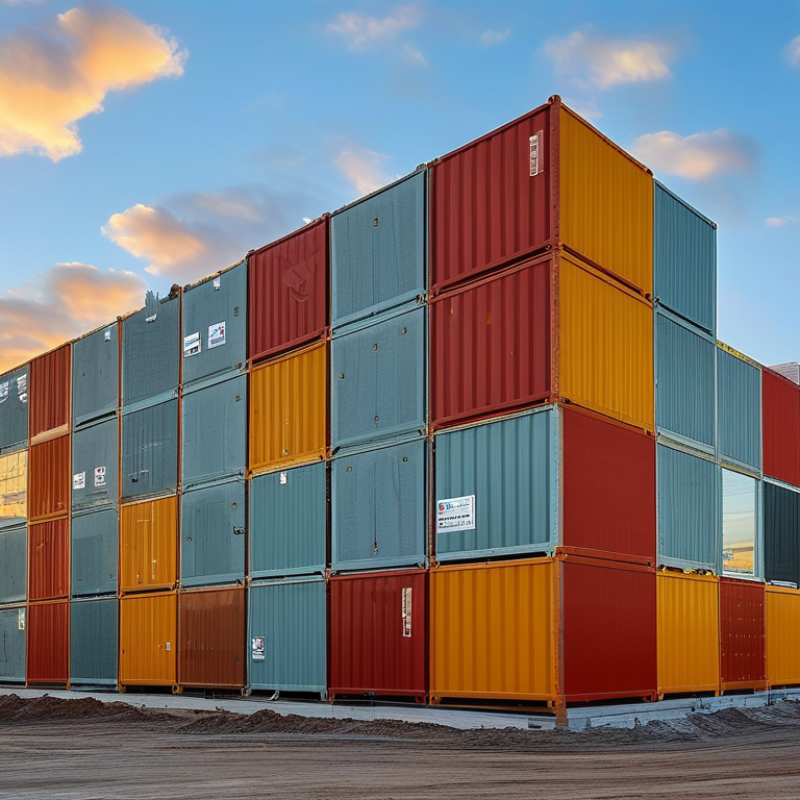
Premade walls are factory-produced wall panels delivered ready for installation. They may include structural frames, insulation, vapor barriers, windows, or service openings. Unlike traditional masonry, production occurs under controlled conditions, then panels travel by truck or container.
The global market works through coordinated specifications, not simple product shopping. Buyers compare thermal performance, fire ratings, panel thickness, connection details, and local approval requirements.
McKinsey estimated that modular construction could represent a $130 billion annual market in Europe and the United States, with potential annual savings of about $22 billion. That estimate shows scale, but project-level results vary sharply.
Transport distance, crane access, labor skills, and foundation accuracy can change the final cost.
Environmental performance is also becoming a purchasing factor. The United Nations Environment Programme reported that buildings and construction accounted for 37% of global energy- and process-related emissions in 2022. Premade walls can reduce site waste and shorten installation time, although factory energy and transport emissions still matter.
Buyers should request tested U-values, documented material sources, moisture-control details, and quality records. A cheaper panel may need costly modifications later.
Sometimes, the “standard” design is not standard enough. Suppliers serving global buyers should provide clear drawings, tolerances, packing plans, and technical support across languages and time zones.
Choosing among premade wall suppliers requires more than comparing catalog prices. A reliable supplier should explain panel materials, load ratings, fire performance, insulation values, and moisture resistance. Ask for current test reports, production records, and samples before approving a large order. Small details matter. Check panel edges, surface consistency, hardware quality, and protective packaging.
Lead time should include manufacturing, inspection, port handling, and inland delivery. Request a written schedule with realistic buffer days. Suppliers offering unusually fast delivery may be overlooking quality checks. Custom dimensions, openings, colors, and connection systems also deserve clear confirmation. Technical drawings should show tolerances, fixing points, and installation sequences. Vague drawings create expensive site problems.
Evaluate communication as carefully as engineering. Can the supplier answer technical questions directly? Do they provide installation guidance, replacement procedures, and a responsive warranty process? Speak with recent buyers when possible, and inspect completed projects through photos or site visits. Total cost includes labor, shipping, repairs, and rejected panels, not only the factory quotation. I once focused too heavily on unit price and underestimated installation training. That decision looked efficient on paper, but it created delays. A second review of the supplier’s references might have exposed the risk earlier. Supplier claims still need independent checking.
Top Premade Walls Suppliers for Global Buyers
Premade wall suppliers usually fall into several practical categories. Modular wall manufacturers offer fast assembly and repeatable dimensions. Their panels often arrive with insulation, wiring channels, and factory-finished surfaces. Precast concrete producers provide strong load-bearing walls, stable fire performance, and useful acoustic control. These products suit warehouses, schools, and multi-unit buildings, but shipping weight can raise costs sharply.
Insulated sandwich panel suppliers focus on thermal efficiency and quick enclosure. Their lightweight panels reduce foundation pressure and installation time. Steel-frame wall suppliers support larger spans and flexible layouts, especially for commercial projects. Timber-frame manufacturers bring renewable material options and warmer interior finishes. However, moisture control and regional treatment standards require close review. A product that performs well in a dry climate may fail in humid conditions.
For global buyers, reliable suppliers share detailed drawings, test reports, packing plans, and installation guidance. They should explain panel tolerances, connector systems, replacement procedures, and expected lead times. Ask for samples, not only digital images. Check the supplier’s experience with export packaging and local building requirements. A low quotation may exclude unloading, crane access, customs handling, or protective coatings. I have seen project schedules change because one small connector was unavailable locally. That weakness deserves attention. Product strength matters, but supply continuity often decides whether a wall system succeeds.
Global buyers need more than low factory pricing when sourcing premade walls. In export projects, I have seen small specification gaps create expensive site delays. A capable supplier should provide controlled drawings, material specifications, and traceable production records. Request samples of joint details, surface finishes, insulation cores, and fasteners before approving large orders. An experienced sourcing team also checks factory capacity, quality staff, and previous export performance. This is where trust becomes measurable. Still, supplier claims need independent verification.
Compliance varies by destination, building type, and installation method. Ask for current fire, structural, thermal, and moisture-performance reports from recognized testing bodies. Confirm that test results match the exact wall assembly, not a similar product. Review declarations, chemical restrictions, labeling rules, and local language requirements with a qualified compliance professional. Keep a revision-controlled technical file. One overlooked bracket or sealant may change performance. It happens.
Logistics planning should begin before production. Confirm panel dimensions, container loading diagrams, crate treatment, moisture barriers, and unloading equipment. Use clear Incoterms, realistic lead times, and inspection points before shipment. Export documents should match the packing list, invoice, origin details, and customs requirements. Ask how damaged panels are reported and replaced, including response times. Sea transport may reduce cost, but port delays can disrupt site schedules. Build contingency stock for vulnerable components. I would also test one full installation locally; factory success does not always survive unfamiliar weather, labor, or tools.
The chart compares selected global sourcing markets using the World Bank Logistics Performance Index 2023 overall score, which ranges from 1 to 5. Higher scores generally indicate stronger customs efficiency, logistics infrastructure, shipment reliability, service quality, and shipment timeliness. Buyers can use this country-level benchmark alongside wall-panel specifications, compliance documentation, production capacity, and project-specific freight quotations.
Source: World Bank, Logistics Performance Index 2023 — https://lpi.worldbank.org/
Top Premade Walls Suppliers for Global Buyers
Global buyers should judge premade wall suppliers beyond factory price. McKinsey’s 2019 modular construction report estimates a potential $130 billion market in Europe and the United States. That opportunity attracts capable factories and weaker imitators. Ask for recent project references, production capacity, wall-panel tolerances, moisture controls, and fire-test records. Request dated inspection photos, not polished brochures. A supplier’s experience must match the wall system, climate, and installation method.
Selection becomes practical when evidence enters a weighted scorecard. Measure quality, lead time, documentation, warranty response, packaging, and landed cost. The 2024 Global Status Report for Buildings and Construction reports that buildings consume 32% of global energy and produce 34% of global CO2 emissions. Buyers should therefore check insulation values, recycled content, repairability, and factory waste records. Manage suppliers through approved drawings, sample panels, inspection hold points, and shipment traceability. No scorecard is perfect. Currency changes, port delays, and misunderstood tolerances can still damage projects.
Tips: Begin with a small pilot order. Use independent inspection before loading. Put defect definitions, replacement timing, and document duties in the contract. Keep one approved revision register. Review monthly with photos and measured data. A cheaper panel can become expensive after rework. This is where many purchasing teams still underestimate risk.
| Supplier Profile | Primary Premade Wall Types | Typical Export Regions | Minimum Order Quantity | Standard Production Lead Time | Customization Capability | Quality Control Coverage | Common Compliance Documents | Packaging and Loading Support | Indicative Payment Terms | Response Time Target | Buyer Management Score |
|---|---|---|---|---|---|---|---|---|---|---|---|
| Supplier Profile 01 | Insulated sandwich panels, modular exterior walls, fire-rated partition systems | North America, Western Europe, Australia, Southeast Asia | 500–1,000 m² or one standard container | 20–30 working days after drawing approval | High | Incoming material inspection, in-process checks, final dimensional inspection | Material test reports, fire-performance documentation, packing list, commercial invoice | Moisture-resistant wrapping, corner protection, container loading plan | 30% deposit; 70% before shipment | Within 24 hours on working days | 4.7/5 |
| Supplier Profile 02 | Precast concrete wall panels, decorative façade panels, boundary wall sections | Middle East, Africa, Central Asia, Eastern Europe | One project lot or 300–600 m² | 30–45 working days, depending on mold requirements | High for project-based orders | Concrete strength testing, reinforcement checks, surface inspection, curing records | Concrete mix records, strength reports, dimensional inspection reports, origin documents | Steel racks, edge restraints, lifting-point identification, loading supervision | 20%–30% deposit; balance linked to production milestones | Within 24–48 hours | 4.5/5 |
| Supplier Profile 03 | Light-gauge steel wall frames, fiber-cement cladding systems, rapid-build panels | United Kingdom, Europe, New Zealand, North America | 100–300 wall modules or one trial project | 15–25 working days after approved shop drawings | High | Steel thickness verification, coating inspection, assembly checks, traceability records | Product data sheets, coating certificates, structural calculations, installation guides | Flat-pack protection, labeled bundles, barcode or part-number tracking | 30% deposit; balance before dispatch or against shipping documents | Within one business day | 4.6/5 |
| Supplier Profile 04 | Autoclaved aerated concrete panels, lightweight partition walls, thermal wall systems | East Asia, Southeast Asia, Gulf markets, Eastern Europe | One container or 800–1,500 m² | 25–40 working days | Medium to high | Density testing, dimensional checks, moisture inspection, pallet condition review | Density and compressive-strength reports, safety data sheets, packing documentation | Fumigated timber pallets where required, waterproof covers, container photos | 30% deposit; 70% before shipment | Within 24–48 hours | 4.3/5 |
| Supplier Profile 05 | Precast decorative walls, architectural façade panels, textured garden walls | North America, Latin America, Europe, Oceania | 200–500 m² or 50–100 panels | 25–35 working days | High for finishes and textures | Color consistency checks, mold inspection, surface-quality review, dimensional sampling | Color samples, finish approval sheets, product specifications, installation instructions | Custom A-frame racks, protective foam, panel numbering, unloading instructions | 25%–40% deposit; balance before shipment | Within 24 hours | 4.4/5 |
| Supplier Profile 06 | Modular PVC-core wall panels, cleanroom partitions, hygienic interior walls | Healthcare, food-processing, logistics, and commercial projects worldwide | 100–250 m² or one project package | 18–28 working days | High for panel dimensions and accessories | Surface inspection, panel thickness checks, accessory compatibility testing | Technical data sheets, hygiene-related test reports, installation manuals, batch records | Protective film, reinforced cartons, moisture control, accessory segregation | 30% deposit; balance before shipment or under agreed trade finance terms | Within 24 hours | 4.2/5 |
| Supplier Profile 07 | Insulated structural panels, cold-room walls, warehouse and agricultural enclosures | Latin America, Africa, Southeast Asia, Southern Europe | 300–800 m² or one container | 20–35 working days | Medium | Core-density checks, adhesive inspection, thermal-performance documentation, final sampling | Thermal test data, fire classification where applicable, installation drawings, packing list | Film-wrapped bundles, reinforced straps, loading photos, moisture protection | 30% deposit; 70% before loading | Within 24–48 hours | 4.1/5 |
| Supplier Profile 08 | Prefabricated timber walls, structural insulated panels, low-rise residential wall kits | Scandinavia, North America, Japan, Australia, New Zealand | One residential project or 150–400 m² | 30–50 working days, including engineering review | High | Moisture measurement, timber grading, joint inspection, dimensional and structural review | Timber treatment records, grading certificates, moisture reports, assembly drawings | Covered bundles, raised supports, moisture barriers, sequenced installation labeling | 20%–30% deposit; milestone payments during production | Within 24–48 hours | 4.5/5 |
Benchmark criteria commonly used by global buyers include verified technical documentation, production capacity, sample approval, quality-control transparency, export packaging, lead-time reliability, payment security, and post-shipment support.