Top Tri Proof Ceiling Lights for Global Buyers?
Global buyers are asking a practical question: which Tri-Proof Ceiling Lights deliver reliable performance across demanding environments?
The answer requires more than brightness claims. Warehouses, parking areas, food-processing rooms, and covered outdoor corridors expose fixtures to dust, moisture, vibration, and temperature changes. A dependable ceiling light must survive those conditions while maintaining stable illumination.
The International Energy Agency has reported that lighting consumes roughly 15% of global electricity. That figure explains why efficient commercial lighting matters to facility owners. The U.S. Department of Energy also notes that LED systems can use substantially less energy than conventional lighting and operate for much longer periods. However, laboratory efficiency is not the same as installed performance.
A 150 lm/W specification may look impressive. It can weaken under high temperatures, poor drivers, or dirty diffusers. Buyers should examine delivered lumens, power factor, surge protection, color consistency, and warranty terms. In humid locations, IP65 or higher protection may be appropriate, but the rating must match the product’s test documentation. IEC 60529 provides the recognized framework for IP classification.
Small details matter.
A well-designed Tri-Proof Ceiling Lights fixture should offer sealed housing, corrosion-resistant materials, flicker-controlled drivers, and simple maintenance access. Certifications also require regional checking, including CE, UKCA, UL, or other applicable marks. These labels do not automatically guarantee long service life.
This guide compares leading options through a buyer’s lens. It considers efficiency, ingress protection, thermal design, installation flexibility, photometric evidence, and total ownership cost. Some conclusions may remain imperfect because supplier data is not always tested under identical conditions. That limitation deserves attention before any global purchase decision.
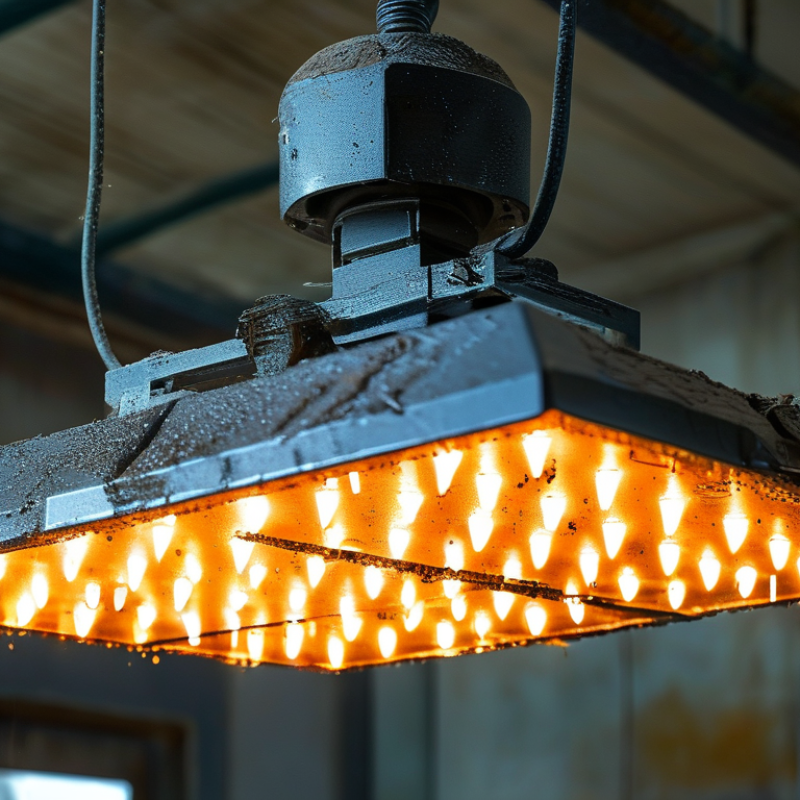
What Are Tri-Proof Ceiling Lights?
Top Tri-Proof Ceiling Lights for Global Buyers?
Tri-proof ceiling lights are sealed luminaires designed for dust, moisture, and corrosion-prone areas. “Tri-proof” describes protection, not one universal construction method. A typical fixture uses a sealed housing, impact-resistant diffuser, and protected electrical connections. Its real performance depends on testing and installation quality. IEC 60529 defines IP ratings. IP65 protects against dust and water jets, while IP66 handles stronger water jets. Neither rating means permanent immersion protection. That detail is often misunderstood.
These lights suit warehouses, parking areas, food-processing rooms, workshops, and humid corridors. Their continuous housing reduces exposed gaps where dust can collect. The U.S. Department of Energy reports that LED lighting can use at least 75% less energy than incandescent lighting. It can also last up to 25 times longer. The International Energy Agency estimates lighting uses about 15% of global electricity. Efficient fixtures matter, although poor controls can weaken the savings. I have seen bright installations waste energy because sensors were badly positioned.
Tips: Check the IP and IK ratings, operating temperature, lumen output, and color temperature. Confirm corrosion resistance for coastal or chemical environments. Ask for independent test evidence, not only sales claims. Verify voltage, emergency options, and local certification requirements before ordering. A higher IP rating is not automatically a better fixture. Fit the specification to the room.
Key Features and Protection Ratings to Compare
Top Tri-Proof Ceiling Lights for Global Buyers?
Key Features and Protection Ratings to Compare
When I inspect tri-proof ceiling lights for warehouses, workshops, or parking areas, I check the enclosure before brightness. A reliable housing should resist dust, moisture, and chemical exposure. Look for sealed end caps, a strong gasket, and a diffuser that does not flex easily. Polycarbonate diffusers often handle impact better than ordinary plastic. That detail matters.
Protection ratings need careful reading. IP65 protects against dust and water jets, while IP66 offers stronger water-jet resistance. IP67 allows temporary immersion, but it does not automatically replace IP66 performance. The product’s test conditions should be clearly documented. An IK08 or IK10 impact rating can also help in busy loading areas. Still, ratings describe test results, not every real installation.
Electrical details deserve equal attention. Confirm the input voltage, frequency, power factor, surge protection, and operating temperature range for the destination market. Emergency lighting requirements may differ by region. Check the installation clips, cable glands, and ceiling distance before ordering large quantities. I have seen good lights fail because installers forced damaged gaskets into place. That mistake is avoidable. Ask for test reports, conformity documents, photometric data, and a clear warranty process. Some suppliers provide impressive numbers, yet explain little about maintenance. That should make a buyer pause.
Top Tri-Proof Ceiling Light Types for Global Applications
Top Tri-Proof Ceiling Light Types for Global Applications
Tri-proof ceiling lights are built for demanding spaces, but their designs serve different needs. Surface-mounted models suit warehouses, parking areas, workshops, and utility rooms. They install quickly on concrete or metal ceilings. Recessed types create a cleaner appearance in food-processing rooms, laboratories, and modern commercial interiors. However, recessed installation needs accurate ceiling dimensions and suitable ventilation.
Vapor-tight tri-proof lights are useful where dust, moisture, or frequent cleaning may occur. Look for an IP65 or IP66 rating, depending on exposure. In busy industrial zones, an IK08 impact rating can offer better protection. Linear versions provide even illumination across aisles and workbenches. Shorter units fit corridors and low ceilings. Select 4000K for balanced visibility, while 5000K can support detailed tasks. Brightness alone is not enough. Glare and uneven spacing still cause problems.
Tips: Confirm local electrical certifications before purchasing. Check voltage, emergency-lighting requirements, mounting hardware, and dimming compatibility. In my project experience, installers often focus on lumen output and overlook ambient temperature. That mistake can shorten service life. Leave room for thermal movement and maintenance access. A sealed fixture may resist water, yet its cable entry can remain vulnerable. Test one sample in the actual environment before ordering at scale. It costs time, but careless replacement costs more.
How to Select the Right Light for Each Environment
Choosing a tri-proof ceiling light starts with the environment, not the catalogue photo.
The IEA estimates that lighting consumes about 15% of global electricity, so efficiency matters across warehouses, parking areas, workshops, and food-processing rooms. Yet lumens alone can mislead. A 4,000-lumen fitting may feel weak in a high-bay space if its beam spreads too widely.
Match protection to real exposure. For dusty workshops, wash-down zones, and covered loading bays, look for tested IP65 or higher protection under IEC 60529. Where impact is possible, review the IK rating as well.
Select 4,000–5,000K for active work areas, but use lower colour temperatures where glare could affect comfort. A colour rendering index above 80 usually suits general tasks; inspection work may require more.
Check operating temperature, input voltage, surge protection, flicker performance, and emergency requirements before ordering internationally. Small details matter.
The U.S. Department of Energy’s 2023 solid-state lighting plan identifies 200 lumens per watt as a research benchmark, not a promise for every finished fixture. Compare delivered lumens and system efficacy instead.
In humid rooms, stainless hardware and sealed connectors can outperform cheaper parts, although corrosion resistance still needs verification.
I have seen projects over-specify IP ratings and under-specify glare control. That is an expensive lesson.
Test one sample at the actual mounting height, because drawings rarely reveal harsh reflections, dark corners, or uncomfortable flicker.
Installation, Maintenance, and International Compliance Factors
Top Tri-Proof Ceiling Lights for Global Buyers
Installation, maintenance, and compliance deserve more attention than lumen claims. A tri-proof ceiling light should match the site’s voltage, frequency, and ambient temperature. Confirm these values before ordering. Some facilities use unstable power, especially in remote areas. A compatible driver can reduce flicker and premature failure. During installation, isolate the circuit and check the mounting surface. Concrete, steel, and insulated panels require different fixings. Keep cable glands tight, and avoid bending cables sharply. Leave space around the housing when the manufacturer specifies thermal clearance.
Ingress protection matters in workshops, warehouses, parking areas, and washdown zones. IP65 may resist dust and water jets, but it does not guarantee protection against every cleaning method. That distinction is often missed. Check the stated impact rating, operating temperature, and photometric files. A light with a sealed housing still needs correct drainage and cable entry. Do not assume every ceiling is level.
Maintenance should include quarterly visual checks in dusty or humid locations. Look for cracked lenses, loose fasteners, darkened LEDs, and water marks inside the housing. Clean with a soft cloth and approved detergent. Harsh solvents may weaken gaskets. Keep records of failures, operating hours, and driver replacements. For international projects, request test reports and declarations covering electrical safety, electromagnetic compatibility, restricted substances, and applicable regional marks. Requirements vary by destination. A familiar certification label is not always enough. Ask for traceable documents, local testing advice, and spare-part availability before approving the purchase.