Best Wood Wainscoting Suppliers in China?
Choosing among the best wood wainscoting suppliers in China requires more than comparing catalog prices. Wall panels may look similar in photographs, yet their cores, veneers, finishes, and machining quality can differ greatly. A reliable supplier should explain whether each panel uses solid wood, plywood, MDF, or engineered board. They should also provide clear information about moisture resistance, formaldehyde emissions, fire performance, and surface protection.
This guide examines practical factors that influence supplier selection. These include factory experience, production capacity, quality-control procedures, customization skills, packaging, and export communication. A serious manufacturer should share material samples, finish swatches, installation drawings, and relevant test reports. Small details matter. Check the panel edges, tongue-and-groove fit, paint consistency, and carton protection before approving a large order.
Samples reveal the truth.
However, supplier research is rarely perfect. A polished showroom cannot prove consistent production, and one excellent sample may not represent every batch. Factory audits, video inspections, and third-party testing can reduce this uncertainty. Buyers should also confirm lead times, minimum order quantities, replacement policies, and payment terms in writing. This article aims to offer a balanced starting point for homeowners, designers, contractors, and distributors seeking dependable Chinese wood wainscoting manufacturers. Some recommendations may still require independent verification, especially when projects involve humid climates, public buildings, or strict local building codes. Good sourcing is not about finding the cheapest panel. It is about finding a supplier that can deliver the specified quality repeatedly, safely, and transparently.
What Is Wood Wainscoting and Why Source It from China?
Wood wainscoting is a wall treatment made from timber, veneer, or engineered wood panels. It protects lower walls from chairs, shoes, and daily impacts. It also adds warmth through visible grain, shadow lines, and measured panel spacing. Common designs include raised panels, flat panels, slatted boards, and tongue-and-groove systems. The material choice matters. Solid wood feels authentic, while MDF and plywood often provide better dimensional stability and cost control.
China is worth considering because its wood-panel manufacturing base is unusually large. The FAO’s 2022 Global Forest Products Facts and Figures report identifies China as the leading producer of wood-based panels, with annual output exceeding 300 million cubic metres. This scale supports custom mouldings, moisture-resistant cores, CNC cutting, and mixed-material production. The China National Forest Products Industry Association also reports strong domestic demand for decorative panels and interior finishing products. Suppliers can often adjust thickness, coating, edge profiles, and packaging for project specifications. However, low price should not be treated as proof of quality. I have seen attractive samples fail because their backing warped after installation.
Tips:
Request moisture-content records, formaldehyde-emission test results, core-density data, and finish samples. Compare the same specification across suppliers. Ask for a small pilot order before approving volume production. Check whether the quoted price includes packing, inspection, and replacement terms. A supplier may promise “solid wood,” yet the visible layer could be a thin veneer. Clarify every layer in writing.
Key Types of Wood Wainscoting Available from Chinese Suppliers
Chinese wood wainscoting suppliers typically offer several practical panel types.
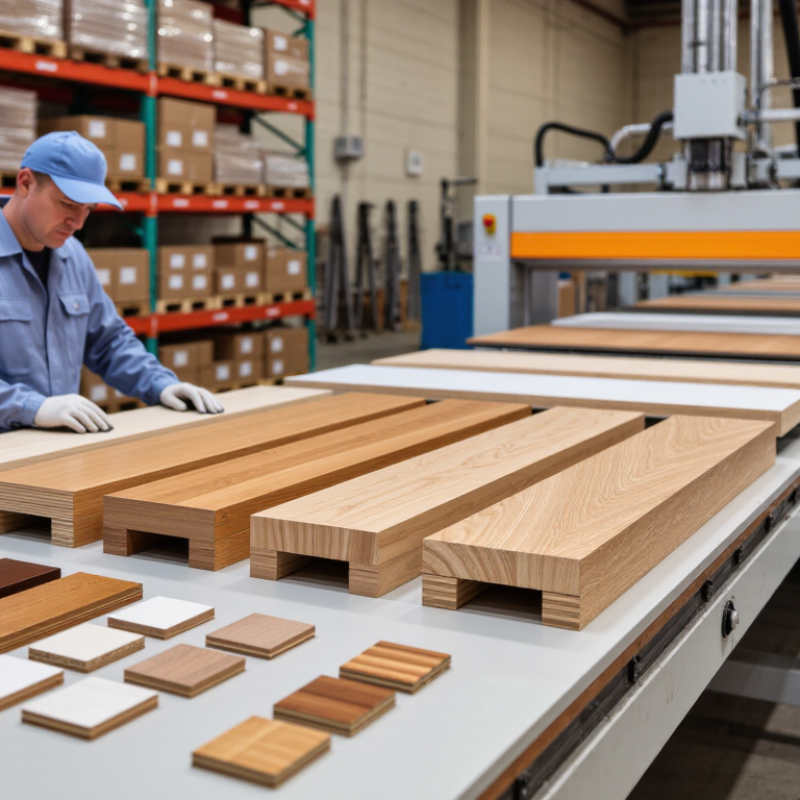
Solid hardwood includes oak, ash, walnut, and rubberwood.
It gives rooms visible grain, stronger impact resistance, and a warmer appearance. However, moisture movement can create gaps without proper acclimatization.
Veneered MDF is widely used for painted or decorative wall panels.
It offers consistent dimensions and lower material waste.
Plywood provides better screw-holding strength for commercial interiors and taller panels.
Beadboard creates narrow vertical lines, while raised panels suit traditional rooms. Slatted wood panels improve texture and may support basic sound absorption.
The FAO Global Forest Products Facts and Figures 2022 reports global industrial roundwood production above 2 billion cubic metres, showing the scale of available wood resources. The Forest Stewardship Council reported more than 200 million hectares of certified forest worldwide in 2023.
Ask suppliers for traceable sourcing documents, moisture readings, core composition, and finish samples. Data matters more than attractive photographs.
Request a 300-by-300-millimetre sample. Check veneer matching, edge sealing, colour variation, and backside stability.
For humid rooms, confirm moisture-resistant cores and installation clearances.
A cheap panel may become expensive after warping, repainting, or replacement.
I would also test several batches, because one sample rarely represents full production quality.
How to Evaluate the Best Wood Wainscoting Suppliers in China
Best Wood Wainscoting Suppliers in China?
Evaluating wood wainscoting suppliers requires more than comparing prices. Request a physical sample before discussing large orders. Check its grain, edge accuracy, coating uniformity, and backing strength. Measure thickness with a caliper. A polished sample can still hide production weaknesses. Ask for factory photographs, production capacity, and recent project references. Reliable suppliers usually explain their process clearly. Vague answers deserve further questions.
Confirm the wood species, moisture content, adhesive type, and surface treatment. For interior panels, stable moisture levels help reduce warping after installation. Request test reports for formaldehyde emissions, fire performance, and durability where relevant. Verify that documents match the actual product, not a similar model. Review tolerances, replacement procedures, packaging details, and delivery schedules in writing. Clear records improve accountability. Communication speed also matters during design changes. However, fast replies do not always mean strong manufacturing skills.
Tips:
Compare at least three suppliers using the same specification sheet. Inspect panel corners after simulated transport. Ask how defects are sorted and recorded. Check whether color batches can remain consistent. Keep a small reserve for future repairs. Even careful buyers may overlook installation conditions, such as uneven walls or high humidity. Discuss these risks before signing, because a low quotation can become expensive after rework.
Top Factors for Comparing Quality, Pricing, and Customization
When comparing wood wainscoting suppliers in China, inspect quality before accepting attractive prices. FAO’s 2023 Global Forest Products Facts and Figures reported about 391 million cubic meters of wood-based panel production worldwide in 2022. High output does not guarantee consistent craftsmanship. Request samples showing core density, veneer matching, edge finishing, and moisture resistance. Check test reports for formaldehyde emissions, bonding strength, and surface durability. Suppliers with ISO 9001 systems may offer stronger process control, but certification alone is not proof of good panels.
Pricing should include more than the quoted square-meter rate. Compare wood species, panel thickness, paint system, packaging, tooling, inspection, and replacement terms. Custom fluting, curved sections, hidden joints, and fire-rated finishes can change costs sharply. Ask for a line-item quotation and a pre-production sample. In my experience, the cheapest offer often excludes installation tolerances or protective packaging. That mistake becomes expensive after arrival. Timber prices also shift with species, drying time, and order volume, so confirm the quotation’s validity period.
Tips: Send drawings with dimensions, tolerances, and photographs. Request moisture readings before shipment. Compare identical specifications from at least three suppliers. The International Trade Centre recommends clearer product classification and documentation for smoother cross-border trade. Still, documentation can be incomplete. Verify independently through factory video checks, third-party inspections, and random carton sampling. A practical scorecard should weight quality, price, customization, lead time, and corrective support separately. One supplier may win on price but fail on color consistency. That deserves careful reflection.
How to Verify, Order, and Import Wood Wainscoting from China
Best Wood Wainscoting Suppliers in China?
Finding reliable wood wainscoting suppliers in China requires more than comparing prices. Ask for the supplier’s business license, workshop address, export history, and recent production videos. A live factory call can reveal storage conditions and finishing equipment. Request samples with matching dimensions, edge profiles, moisture readings, coating details, and formaldehyde test results. Check whether the reports belong to the actual product, not a similar panel. This step is often skipped.
Before ordering, send clear drawings with panel thickness, width, length, joint design, color reference, and acceptable tolerances. Approve a production sample in writing. Include packaging, replacement terms, inspection procedures, lead time, and payment milestones in the contract. An independent inspection before shipment can check quantity, surface defects, carton labels, and moisture damage. Photos help, but they do not replace measurements.
For importing, confirm the correct customs classification with your broker before payment. Prepare the commercial invoice, packing list, bill of lading, certificate of origin, and insurance documents. Ask whether wooden pallets or crates require compliant treatment marks in your destination country. Confirm fire-rating and emissions requirements locally; these rules vary by market. Use moisture-resistant packaging with corner protection, especially for long sea shipments. A low quotation may exclude inland delivery, duties, testing, or port charges. I once underestimated packaging volume, and the final freight cost changed the order’s value. Leave room for such mistakes.