China Top 10 Prefab Wall Panel Manufacturers
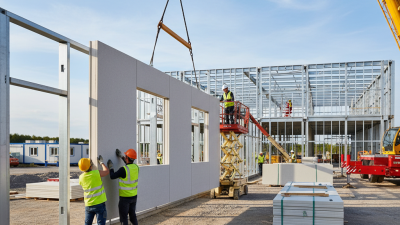
China’s prefab wall panels industry is expanding as developers seek faster, cleaner, and more predictable construction. Mordor Intelligence’s Prefabricated Buildings Market report identifies rising modular adoption, labor shortages, and shorter project schedules as major growth drivers. China’s dense urban development makes these pressures especially visible. On a busy site, factory-made panels can arrive labeled, stacked, and ready for installation instead of waiting for repeated wet trades.
The environmental case is also significant. The 2023 Global Status Report for Buildings and Construction, published by the United Nations Environment Programme, states that buildings and construction account for about 37% of global energy-related and process emissions. Better factory control may reduce material waste, although results depend on transport, insulation materials, and installation quality. McKinsey’s research on modular construction reports potential time savings of 20% to 50% and cost reductions in suitable projects. These figures are useful benchmarks, not guaranteed outcomes.
This overview examines China’s top 10 prefab wall panels manufacturers through practical criteria. They include production capacity, panel performance, fire resistance, moisture control, quality systems, testing records, export experience, and completed projects. Certifications matter. So do factory visits and independent laboratory reports. Public information is uneven, and rankings cannot capture every supplier’s real performance. Some manufacturers communicate excellent capabilities but provide limited project evidence. That deserves careful review. The selected companies represent visible market strength, not an absolute verdict. Buyers should still compare specifications, warranty terms, lead times, and local building-code compatibility before signing a contract.
Prefab Wall Panels: Definition, Types, and Core Applications
Prefab Wall Panels: Definition, Types, and Core Applications
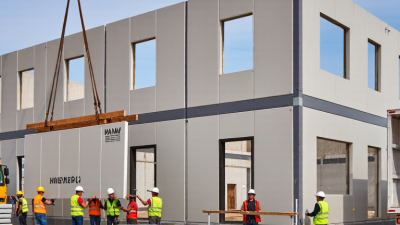
Prefab wall panels are factory-made building elements produced under controlled conditions, then transported for rapid site installation. They may include concrete, autoclaved aerated concrete, gypsum, insulated sandwich cores, or light-gauge steel frames. Unlike traditional masonry, panels arrive with consistent dimensions, embedded services, and prepared connection points. Quality still depends on design coordination. A small opening error can delay an entire floor.
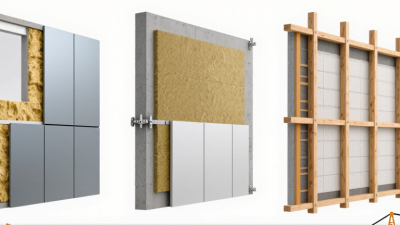
Common types include structural insulated panels, precast concrete panels, non-load-bearing partition panels, and exterior cladding systems. Insulated panels combine rigid cores with protective skins, improving thermal performance around offices, warehouses, and cold-storage rooms. Precast concrete provides strength and fire resistance for apartments, schools, and industrial buildings. Lightweight partitions suit hotels and interior renovations, where reduced dead load matters. Not every “green” panel performs well; transport distance, adhesives, repairability, and end-of-life treatment require careful review.
The McKinsey Global Institute estimated that modular construction could create a 130-billion-dollar annual market in the United States and Europe, while improving productivity and reducing costs. The 2023 UNEP Global Status Report also states that buildings and construction consumed 32% of global energy and produced 34% of global carbon emissions in 2022. These figures explain the growing interest in factory-controlled wall systems. For projects in China, buyers should verify fire ratings, moisture resistance, acoustic data, connection details, and third-party test records. Installation speed is valuable. Poor detailing can erase it.
China’s Prefab Wall Panel Manufacturing Landscape
China’s Prefab Wall Panel Manufacturing Landscape
China’s prefab wall panel sector serves apartments, hospitals, offices, schools, and industrial buildings. Manufacturers commonly produce lightweight concrete, autoclaved panels, sandwich panels, and fiber-reinforced systems. Each type offers different insulation, fire resistance, strength, and installation requirements.
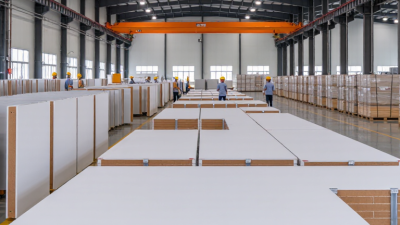
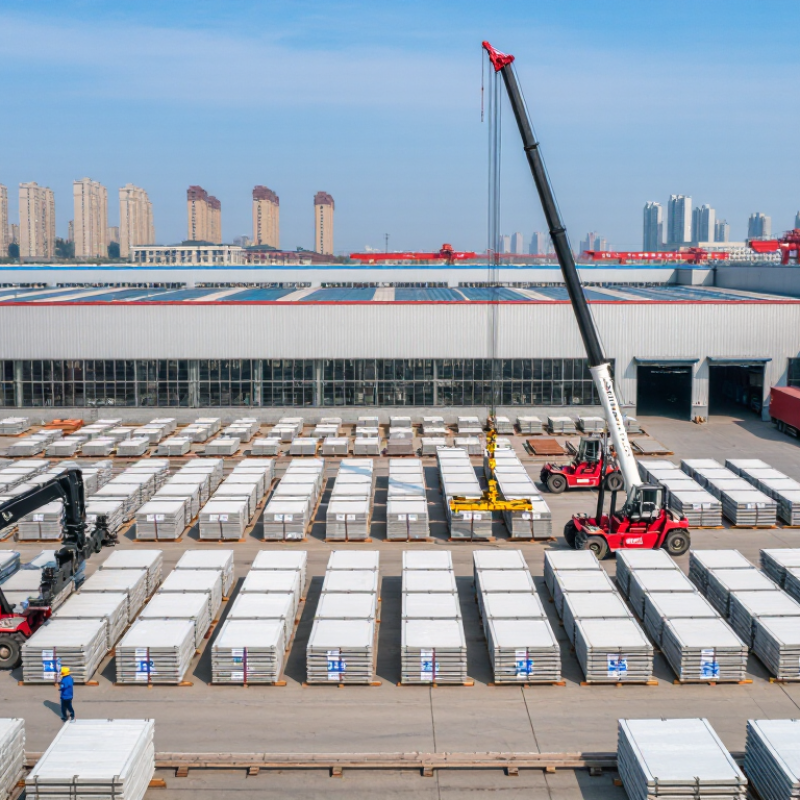
Factory visits often reveal automated cutting lines, curing chambers, and organized storage areas. Quality teams usually inspect dimensions, density, moisture content, surface flatness, and connection strength. Reliable suppliers can provide test reports, production records, installation guidance, and samples from current batches. Details matter.
The top 10 manufacturers should not be judged by factory size alone. Buyers need to compare material consistency, engineering support, export experience, and response time. Local building codes and climate conditions also influence the correct panel choice. A coastal project may require stronger moisture protection, while a cold region may prioritize thermal performance.
A catalog rarely shows every production weakness. Some panels may arrive with chipped edges after long transport. Installation can also expose unclear drawings or unsuitable joint details. This is where technical communication becomes important. Experienced manufacturers should explain tolerances, packaging methods, lifting points, and repair procedures before shipment. Independent testing remains valuable, especially for large projects. The market is advanced, but not perfectly uniform. Careful verification still protects project quality, schedule, and operating costs.
China’s newly started prefabricated-building floor area expanded substantially from 2019 to 2022, creating broader demand for industrialized wall-panel production. The 2023 adjustment still indicates a large addressable manufacturing base. These national figures are used as a market-demand proxy rather than as wall-panel output or company-level data.
Profiles of the Top 10 Chinese Prefab Wall Panel Manufacturers
China’s top ten prefab wall panel manufacturers represent different production strengths and project experiences. Several specialize in autoclaved aerated concrete panels for residential buildings. Their panels are light, fire-resistant, and easier to cut on site. Others focus on reinforced concrete panels for schools, warehouses, and infrastructure projects. These products usually provide higher impact resistance, but they require stronger lifting equipment.
Some manufacturers produce insulated sandwich panels with mineral wool or expanded polystyrene cores. Their technical teams often help clients select thickness, joint methods, and surface finishes. A few factories concentrate on glass-fiber reinforced concrete panels for decorative facades. They can reproduce stone textures, ribbed surfaces, and curved forms with reasonable consistency. Manufacturers with export experience usually understand container loading, moisture protection, and regional building requirements. Still, documentation quality can differ considerably.
Reliable suppliers normally provide compressive-strength results, fire-performance reports, dimensional tolerances, and installation instructions. Factory visits can reveal practical details that brochures omit, such as panel storage, mold maintenance, and worker training. Some producers use automated cutting lines, while others depend more heavily on manual finishing. Manual work is not automatically poor, but it increases inspection demands. No factory is flawless. Minor edge damage, delayed samples, or unclear drawings may still appear. Buyers should compare production records, independent test evidence, and completed project feedback before selecting a manufacturer. A careful review often matters more than an impressive catalog.
Comparing Products, Certifications, Capacity, and Export Services
China Top 10 Prefab Wall Panel Manufacturers
Comparing the top ten manufacturers requires more than checking panel prices. Product reviews should examine sandwich panels, lightweight concrete panels, fire-rated boards, and insulation cores. UNEP’s 2023 Global Status Report states that buildings and construction created 37% of global energy-related emissions in 2022. Therefore, thermal performance deserves serious attention.
Certification evidence separates capable factories from attractive websites. Buyers should request current ISO 9001 quality certificates, ISO 14001 environmental certificates, and tested fire classifications. EN 13501-1 and ASTM E119 reports can clarify fire behavior, but only when their scope matches the actual panel. Factory capacity also needs verification. Check annual output, curing rooms, automated cutting lines, and recent production records. Claimed capacity can be optimistic.
Export service is equally important. Strong suppliers provide drawings, loading plans, moisture protection, fumigation records, packing lists, and certificates of origin. They should also explain Incoterms, inspection stages, and replacement procedures. The International Energy Agency reports that building-sector emissions remain above the trajectory needed for net-zero goals, increasing pressure for efficient materials. However, embodied carbon data is often incomplete. That weakness deserves scrutiny. A factory may offer impressive insulation values but provide limited lifecycle evidence. Independent testing, sample approval, and a small trial shipment can expose practical problems before a full container order.