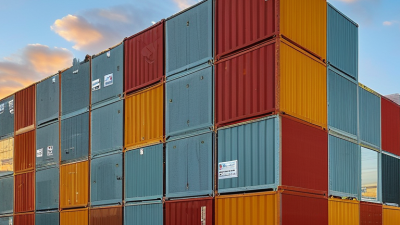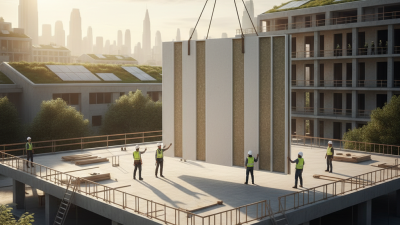


The global demand for pre fab walls is rising as builders seek faster installation, lower waste, and more predictable project costs. McKinsey’s 2019 report, “Modular Construction: From Projects to Products,” estimated that modular construction could create a market worth about $130 billion across Europe and the United States. It also identified potential cost savings of up to 20 percent. These figures are promising, but they do not guarantee quality.
Markets are changing quickly.
The Global Status Report for Buildings and Construction, published by UNEP in 2023, reported that buildings remain responsible for approximately 37 percent of global energy-related emissions. This pressure is encouraging buyers to examine insulated wall systems, airtightness, recycled materials, and factory-controlled production. Yet, a wall that performs well in a laboratory may face moisture, transport, or installation problems on site. That difference deserves attention.
Mark Farmer, a leading construction-modernisation adviser, warned the industry with the phrase, “Modernise or die.” His observation remains relevant to pre fab walls suppliers serving international buyers. Reliable suppliers should demonstrate product testing, documented quality procedures, fire-performance data, thermal values, and stable export experience. They should also explain weaknesses clearly. Perfect claims can be a warning sign.
This guide reviews China’s top 10 pre fab walls suppliers for global buyers. It considers manufacturing capacity, customization, certifications, delivery support, and project experience. Price matters, but it is only one part of the decision. A cheaper panel can become expensive after delays, redesigns, or failed inspections. The strongest supplier may not be the largest. It may be the one that communicates limits before the contract is signed.
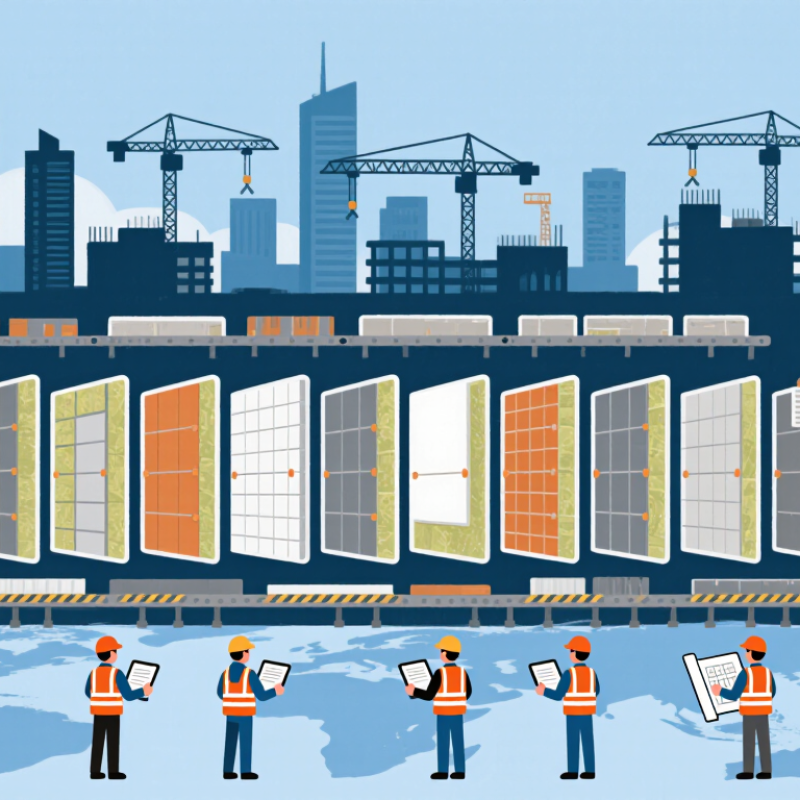
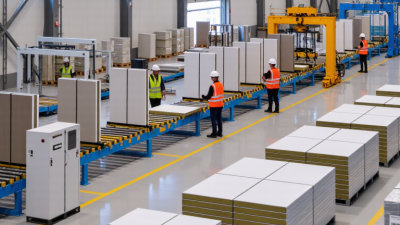
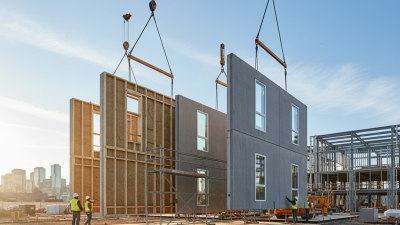
Prefabricated wall systems are factory-made panels, frames, insulation layers, and surface finishes assembled before shipment. Workers produce them under controlled conditions, then install them at the building site. Some systems use lightweight steel, concrete, cement board, or composite insulation. A finished panel may arrive with openings for doors, windows, cables, and pipes.
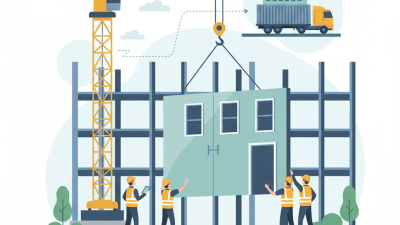
Global buyers often choose China because its manufacturing network supports large production volumes and flexible specifications. Suppliers can adjust panel thickness, fire-resistance requirements, thermal performance, and surface textures for different climates. Factory production also reduces wet work, material waste, and installation time. A container may carry numbered panels, fixing parts, and installation drawings. This makes site coordination easier, when the documents are accurate.
Cost is important, but it should not control every decision. A low quotation may exclude testing, packaging, local engineering, or replacement parts. Buyers should request material certificates, production photos, sample panels, and independent inspection records. Check tolerances carefully. A small dimensional error can delay an entire floor. Communication can also be imperfect, especially when technical terms are translated too quickly. Clear drawings and a written approval process help. China can offer strong value, yet buyers still need to verify factory capacity, quality controls, moisture protection, and compliance with local building rules.
China’s leading prefabricated wall suppliers should be judged by repeatable evidence, not catalogue variety. McKinsey’s 2019 modular-construction analysis reports potential schedule reductions of 20–50%. That range is not a promise. Factory discipline determines the result. Request production records for moisture content, panel flatness, adhesive batches, and curing temperatures. Ask for evidence.
A serious evaluation should match wall systems with local building requirements. Check fire ratings, acoustic results, thermal conductivity, wind resistance, and seismic performance. Require laboratory reports showing the tested assembly, not only individual materials. ISO 9001 certification indicates a quality system, but it does not prove wall performance. Review at least three recent projects with similar climate, height, and installation methods. Video tours help, although they can hide daily production problems.
Sustainability also needs measurable proof. UNEP’s 2023 Global Status Report states that buildings used 34% of global energy and created 37% of energy-related emissions in 2022. Ask suppliers for environmental product declarations, insulation data, recycled content, and packaging plans. Compare landed cost, not factory price. Include tooling, port handling, insurance, replacement panels, and local installation. My own checklist once overvalued fast quotations. It missed after-sales response time. That mistake matters. A supplier should provide drawing revisions, batch traceability, spare-part guidance, and a clear remedy for damaged panels. Thin documentation is a warning sign.
A practical procurement benchmark for global buyers assessing prefabricated wall suppliers. The weighting reflects common purchasing priorities: regulatory compliance, wall performance, customization, manufacturing capability, export logistics, and after-sales support.
The percentages represent evaluation priorities rather than the performance of any specific company. Buyers should verify certificates, test reports, production records, delivery terms, and warranty conditions independently.
China’s top ten prefab wall manufacturers cover distinct production strengths. One focuses on reinforced concrete panels for warehouses and schools. Another supplies insulated sandwich panels with fast installation. A third produces lightweight EPS wall systems for budget-sensitive projects. A fourth specializes in rock wool panels where fire resistance matters. AAC block manufacturers offer lighter masonry with useful thermal performance. GRC producers create decorative facades with controlled surface textures. Light steel wall factories support flexible layouts and smaller buildings. Modular manufacturers combine walls, floors, and service openings in one system. Custom exporters adapt panel sizes, joints, and finishes for overseas specifications. The final group often handles engineering support, packaging, and replacement parts.
Reliable evaluation requires more than comparing quoted prices. Ask for factory inspection records, material test reports, production capacity, and recent project evidence. Check panel thickness, density, moisture resistance, connection details, and fire testing. Confirm whether testing follows relevant EN, ASTM, or local standards. Ask who manages quality checks before loading containers. Experienced buyers also review drawings carefully, because a small joint error can delay installation. A polished catalog may hide weak technical support. That risk deserves attention.
Tips: Request one physical sample and a video inspection before ordering. Compare delivered cost, not only factory price. Verify tolerances, packing methods, and replacement procedures in writing. Keep communication documented. Some suppliers may promise too much, so independent verification remains wise.
For global buyers comparing the top ten prefabricated wall suppliers, material choice should come before price. Steel-framed panels offer high dimensional stability and suit multi-story projects. Concrete panels provide strong fire resistance, acoustic control, and thermal mass. Timber systems reduce weight and embodied carbon, but moisture management is critical. Industry reports from Grand View Research estimate the global modular construction market will expand at about 6% annually through 2030. That growth reflects faster factory production, not identical product quality.
Performance data must be verified, not assumed. Ask for tested U-values, fire ratings, sound transmission results, wind-load capacity, and water-tightness records. The International Energy Agency reports that buildings account for roughly 30% of global energy demand. Insulation quality therefore affects operating costs for decades. Mineral wool, EPS, and PIR cores perform differently under heat, humidity, and fire exposure. Small details matter. Check panel joints, vapor barriers, lifting points, and site tolerances.
Customization can include thickness, openings, finishes, connection systems, and local code adaptations. However, excessive customization may remove factory savings. Public construction cost databases and supplier quotations commonly show prefab wall prices ranging widely, often around 40–120 USD per square meter before transport, installation, and engineering. That range is only directional. Freight distance, crane access, currency, and order volume can change the final figure sharply. MarketsandMarkets identifies logistics and standardization as major factors shaping prefab construction costs. A careful comparison should request a complete landed-cost schedule. I would still challenge optimistic delivery promises; factory speed cannot fix incomplete drawings or poor foundations.
| Rank | Supplier Profile | Primary Wall System | Typical Materials | Common Panel Thickness | Thermal Conductivity | Fire Performance | Acoustic Performance | Customization Capability | Typical Lead Time | Indicative Export Price | Best-Fit Applications |
|---|---|---|---|---|---|---|---|---|---|---|---|
| 01 | Profile A | Insulated sandwich panel | Pre-painted steel skins with EPS core | 50–150 mm | Approximately 0.035–0.040 W/m·K | Limited to moderate; depends on core density and tested assembly | Approximately 20–30 dB | High; panel length, color, surface profile, joints, and openings | 2–4 weeks | US$18–35/m² | Temporary buildings, warehouses, agricultural buildings, low-cost enclosures |
| 02 | Profile B | Insulated sandwich panel | Steel skins with PIR or PUR rigid foam core | 50–200 mm | Approximately 0.020–0.026 W/m·K | Moderate to high; verify the complete wall assembly certification | Approximately 25–35 dB | High; fire-rated joints, concealed fixings, colors, and cut-outs | 3–5 weeks | US$28–55/m² | Cold rooms, industrial buildings, logistics facilities, commercial projects |
| 03 | Profile C | Fire-resistant sandwich panel | Steel skins with mineral wool core | 50–200 mm | Approximately 0.038–0.045 W/m·K | High; non-combustible mineral wool core options are available | Approximately 32–42 dB | Medium to high; panel modules, coatings, joints, and service penetrations | 4–6 weeks | US$35–70/m² | Factories, public buildings, fire-sensitive facilities, industrial partitions |
| 04 | Profile D | Lightweight composite wall panel | Cement-faced boards with EPS or lightweight aggregate core | 60–150 mm | Approximately 0.045–0.070 W/m·K | Moderate; depends on board composition and tested thickness | Approximately 35–45 dB | High; dimensions, embedded conduits, surface finishes, and door openings | 4–7 weeks | US$30–65/m² | Interior partitions, residential buildings, offices, renovation projects |
| 05 | Profile E | Autoclaved aerated concrete panel | Autoclaved aerated concrete reinforced with steel mesh | 75–200 mm | Approximately 0. on 0.11–0.16 W/m·K | High; mineral-based material with strong fire resistance | Approximately 38–48 dB | Medium; standard modules with engineered openings and reinforcement | 5–8 weeks | US$40–80/m² | Residential walls, commercial buildings, fire-rated external envelopes |
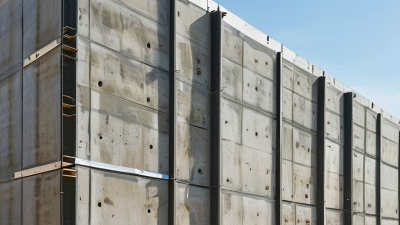
| 06 | Profile F | Precast concrete wall panel | Reinforced concrete with optional insulation layer | 100–250 mm | Approximately 0.20–1.70 W/m·K, depending on insulation | High; concrete provides strong fire resistance | Approximately 45–55 dB | High but engineering-intensive; molds, embeds, textures, and openings | 6–10 weeks | US$65–140/m² | Permanent buildings, infrastructure, industrial compounds, boundary walls |
| 07 | Profile G | Glass-fiber-reinforced concrete panel | GRC/GFRC with cement matrix and alkali-resistant glass fibers | 10–30 mm facing; engineered backing system required | Approximately 0.40–1.00 W/m·K | High; non-combustible cementitious surface | Approximately 35–50 dB with a complete wall build-up | Very high; shapes, textures, colors, molds, and architectural details | 6–12 weeks | US$90–220/m² | Architectural façades, feature walls, hotels, museums, premium developments |
| 08 | Profile H | Expanded polystyrene insulated panel | EPS core with cement boards, calcium silicate boards, or steel skins | 50–200 mm | Approximately 0.035–0.045 W/m·K | Low to moderate unless protected by tested fire-rated boards | Approximately 25–40 dB | High; modular sizes, surface boards, reinforcement, and openings | 3–6 weeks | US$22–48/m² | Modular housing, low-rise construction, partitions, budget projects |
| 09 | Profile I | Rock wool acoustic wall panel | Perforated or solid steel skins with high-density rock wool core | 50–150 mm | Approximately 0.038–0.045 W/m·K | High; suitable for applications requiring non-combustible insulation | Approximately 35–50 dB | Medium to high; perforation patterns, coatings, joints, and panel lengths | 4–7 weeks | US$42–85/m² | Studios, machinery rooms, industrial buildings, acoustic partitions |
| 10 | Profile J | Light-gauge steel framed wall system | Galvanized steel framing with insulation and board cladding | 75–250 mm | Approximately 0.020–0.060 W/m·K, depending on insulation design | Moderate to high; determined by board layers and tested assembly | Approximately 40–55 dB | Very high; structural layouts, insulation, cladding, openings, and services | 5–9 weeks | US$55–120/m² | Prefabricated houses, offices, schools, villas, multi-purpose buildings |
| Buyer’s note: The figures are indicative China export-market ranges for comparable wall systems and are not quotations from named companies or brands. Prices generally exclude foundations, installation, local taxes, customs duties, engineering approval, cranes, and inland delivery. Actual thermal, acoustic, structural, and fire performance must be confirmed through project-specific calculations and independently tested complete wall assemblies. Pricing is typically affected by order quantity, panel thickness, steel or board specification, insulation density, surface finish, packaging, destination port, and certification requirements. | |||||||||||
Global buyers should verify prefab wall suppliers beyond polished catalogs. Request factory licenses, production photos, project references, material certificates, and third-party test reports. Check panel thickness, core density, fire rating, thermal performance, moisture resistance, and connection details. A factory certificate is not enough.
McKinsey’s 2019 report, Modular construction: From projects to products, found that modular methods may reduce construction schedules by 20–50% and costs by up to 20%. These figures are not automatic. Buyers should compare a complete landed-cost model, including tooling, packaging, inland transport, ocean freight, duties, insurance, and installation. Ask for a physical sample. Measure it.
Purchase contracts should define tolerances, inspection stages, replacement procedures, and delivery milestones. Independent pre-shipment inspection can confirm dimensions, surface finish, labeling, and packing conditions. The World Bank’s 2023 Logistics Performance Index shows that customs efficiency and shipment tracking remain important differences between markets. Importers should confirm HS classification with a licensed customs broker. Local building codes also control fire, wind, seismic, and energy requirements.
Use a small pilot order before scaling. It exposes weak packaging and unclear drawings. Sometimes, the cheapest quotation hides missing accessories or unrealistic freight assumptions. That gap matters. Recheck every calculation against the destination site, not only the supplier’s spreadsheet.