

China Top Engineered Beams Manufacturers?

China’s leading engineered beams manufacturers compete on more than price. Buyers need to compare beam type, certified strength, production consistency, lead times, and traceable test data. For timber products, that means checking whether glulam, LVL, or I-joists meet the project’s specified loads and dimensions. A polished catalogue is not proof of performance.

The need for lower-impact construction is growing. The 2024 Global Status Report for Buildings and Construction, published by UNEP and GlobalABC, reports that the sector produced 37% of global energy- and process-related CO₂ emissions in 2022. That figure does not prove any single beam is greener. It does make product-level evidence important. The USDA Forest Products Laboratory’s Wood Handbook also provides technical reference material on wood properties and structural use. For a manufacturer comparison, these sources help frame the questions; factory audits, test reports, and project records must answer them.

Architect Michael Green is a prominent advocate for using timber as a structural building material. His public work supports that broader case, but no verified transcript was supplied here, so I will not invent a verbatim quotation. A little caution belongs in any ranking. “Top” depends on the project. This outline will help readers assess China’s engineered beams manufacturers through product range, documented quality, customization, and export capability—not marketing claims alone.
China Top Engineered Beams Manufacturers?

What Engineered Beams Are and How They Differ from Conventional Beams

China Top Engineered Beams Manufacturers?

What Engineered Beams Are and How They Differ from Conventional Beams

Engineered beams are made by bonding wood layers, veneers, or strands into structural members. Common types include laminated veneer lumber, glulam, and wood I-joists. Their materials and manufacturing processes are designed to provide predictable strength and consistent dimensions. That can help crews plan longer spans and reduce surprises from knots or natural grain variation. Still, engineered does not mean indestructible.

Conventional beams are usually sawn from a single piece of timber. Their strength can vary with knots, grain direction, and moisture. They may be easier to cut on site, but size and quality vary between pieces. Engineered products often need closer attention during installation. Unapproved cuts or holes can weaken them, and exposure to water may affect some products. Small details matter. For either beam type, selection depends on span, load, support conditions, and connection design. Check product specifications and local engineering requirements rather than choosing by appearance alone. A neat, straight beam is not automatically the right one.

Common Types of Engineered Beams Manufactured in China

Engineered beams manufactured in China include laminated veneer lumber, glued laminated timber, and wood I-joists. Each type suits different structural needs. Laminated veneer lumber, or LVL, uses thin wood veneers bonded with their grain aligned. This creates a strong, consistent beam for headers, floor supports, and roof framing. Its smooth edges make handling and cutting straightforward.

Glued laminated timber, commonly called glulam, bonds layers of lumber into straight or curved members. It can span large rooms, support roof structures, or create visible architectural features.

Wood I-joists use top and bottom flanges joined by a thin web, often made from structural board. They are lighter than solid-sawn beams and useful for long floor spans. A narrow web needs careful handling.

Some producers also make parallel strand lumber and related composite members for concentrated loads or demanding spans. Product details vary by factory and specification. Buyers should check grade markings, moisture content, dimensions, adhesive-bond quality, and test documentation. A beam can look flawless and still need verification. Design loads and connection details matter just as much as the beam itself.

How Engineered Beams Are Designed and Produced

China Top Engineered Beams Manufacturers?
How Engineered Beams Are Designed and Produced

Engineered beams are designed around loads, span, moisture exposure, and support conditions—not appearance alone. Engineers select a product type, such as laminated veneer lumber, glulam, or an I-joist, then calculate the required strength and stiffness. They also check connections and deflection. A beam can be strong yet feel bouncy if its stiffness is poorly matched to the span.

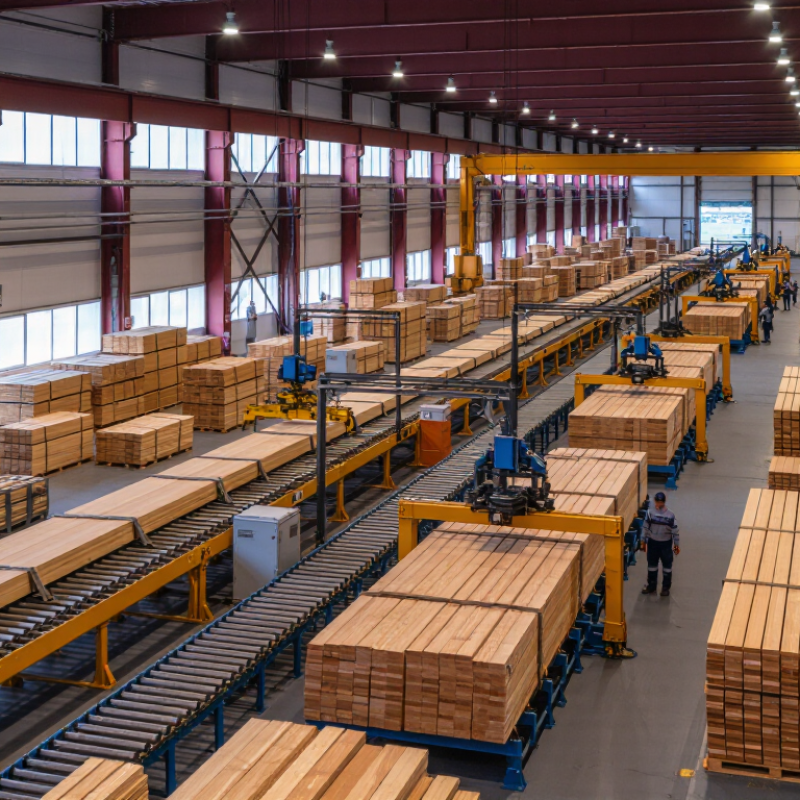
Production starts with graded wood and controlled bonding. For laminated products, thin veneers or lumber pieces are arranged so their grain supports the intended loads. Adhesive is applied, layers are pressed, and the finished member is trimmed and inspected. The USDA Forest Products Laboratory’s Wood Handbook (2021) explains how wood’s moisture content affects its behavior; manufacturers therefore control material moisture and bonding conditions. APA’s Engineered Wood Construction Guide lists common I-joist depths of 9½, 11⅞, 14, and 16 inches, useful reference points when planning floor systems. Still, standard dimensions do not replace project-specific design.

Tips: Check the beam schedule, bearing length, and moisture conditions before installation. Keep members dry and follow the manufacturer’s published handling instructions. Small details matter. A missed support or cut can undermine an otherwise careful design.

China Top Engineered Beams Manufacturers? - How Engineered Beams Are Designed and Produced

Engineered Beam Type Typical Construction How It Is Produced Common Applications Important Quality Checks
Laminated Veneer Lumber (LVL) Thin wood veneers bonded in layers, usually with the grain of most veneers aligned in the same direction. Logs are peeled into veneers; veneers are dried, graded, coated with adhesive, assembled into a layup, hot-pressed, and cut to size. Beams, headers, lintels, rim boards, and other structural members. Veneer condition and moisture, adhesive application, press conditions, bond integrity, dimensions, and product grading.
Glue-Laminated Timber (Glulam) Multiple solid-wood lamellas bonded face to face, with the grain generally running along the member length. Lumber is dried, planed, strength-graded, and finger-jointed when longer lamellas are needed. Adhesive is applied, the lamellas are assembled and pressed, then the member is finished. Long-span beams, roof structures, columns, and curved structural members. Lamella grade and moisture, finger-joint quality, adhesive spread, pressing and curing, member geometry, and visual or machine grading.
Wood I-Joist Two flanges—often solid-sawn lumber or LVL—joined by a thin structural panel web, commonly OSB or plywood. Flange and web components are prepared; adhesive is applied to the web edges or flange grooves; components are assembled, pressed or clamped, and cut to length. Floor joists and roof framing, particularly where long, straight members are useful. Flange and web dimensions, web alignment, adhesive bond, end cuts, and compliance with the applicable product specification.
Parallel Strand Lumber (PSL) Long, narrow wood strands bonded with their length primarily aligned with the member axis. Strands are prepared and dried, coated with adhesive, oriented in a continuous layup, consolidated under heat and pressure, and cut to required dimensions. Structural beams, headers, columns, and other heavily loaded members. Strand quality and orientation, moisture, resin distribution, press conditions, density consistency, and finished dimensions.
Laminated Strand Lumber (LSL) Wood strands bonded into a structural panel or billet, with strands predominantly oriented along the product length. Strands are dried, blended with adhesive, oriented, formed into a mat, pressed under heat and pressure, and sawn or finished into product sizes. Beams, headers, studs, rim boards, and other framing components, depending on the product grade. Strand moisture and distribution, adhesive coverage, orientation, pressing conditions, density, dimensions, and grade identification.

Note: These are general product descriptions and manufacturing steps. Exact materials, processes, allowable uses, and performance depend on the product grade and applicable building-code requirements. Beam sizing and structural design should be verified by a qualified professional using published product data.

Leading Engineered Beam Manufacturers in China and Their Capabilities

China’s engineered-beam manufacturers serve residential, commercial, and industrial projects with products such as glulam, laminated veneer lumber, and I-joists. Their capabilities vary: some focus on standard sizes, while others cut beams to project drawings and offer custom lengths or end details. Production equipment matters, but so does process control.

Experienced manufacturers monitor timber moisture, adhesive application, pressing conditions, and finished dimensions. These checks help reduce warping and inconsistent bonding. Small details matter. Buyers can ask for grading information, test reports, and records showing how products are inspected. They should also confirm that the documentation matches the building codes and specifications for the intended market.

Factory visits or technical discussions can reveal how well a supplier handles drawings, packaging, and delivery schedules. A polished catalogue may not show production limits. Ask about minimum order quantities, dimensional tolerances, and how defects are handled. Some suppliers may have strong machining capacity but less flexibility with small batches; that trade-off deserves attention. Clear answers are useful, though they do not replace independent review of structural calculations and product documents.

How to Evaluate Chinese Engineered Beam Suppliers

China Top Engineered Beams Manufacturers?

How to Evaluate Chinese Engineered Beam Suppliers

Choosing an engineered-beam supplier takes more than comparing unit prices. In 2023, China produced 1,005.1 million tonnes of crude steel, according to the World Steel Association’s World Steel in Figures 2024. That figure shows the scale of the steel industry, not the quality or capacity of any individual beam supplier. Details matter.

Request material certificates, dimensional inspection records, and traceability from steel heat number to finished beam. Check flange width, web depth, straightness, and weld appearance against your drawings and specified standards. Ask how defects are documented and corrected. A polished sample is useful, but it cannot replace production records. If possible, arrange an independent factory inspection and review a sample inspection report before approving an order. Also verify packing plans: long beams need stable supports and clear identification to reduce handling damage.

Tips: Compare like with like. Send every supplier the same drawings, tolerances, coating requirements, and delivery terms. Ask for one recent test record, then confirm its details with the issuing laboratory. I would not rely on a single video call; real production conditions can be messy, and that is exactly why documented checks matter.

How to Evaluate Chinese Engineered Beam Suppliers

Suggested evaluation weights for comparing suppliers. These are a buyer-defined starting point, not measured industry or supplier performance data.

Prioritize documented product conformity, structural testing, and material quality. Verify claims with current certificates, inspection records, test reports, and project-specific evidence; adjust the weights to match your application and risk requirements.

Go to Top